VÍ DỤ THỰC TẾ · PDF SANG WORD, SAU ĐÓ SANG TIẾNG TÂY BAN NHA

Nhãn thuốc 68 trang thành tờ rơi bệnh nhân 2 trang, sau đó là bản tiếng Tây Ban Nha

Một hiệu thuốc bệnh viện đã nhận được nhãn thuốc dài 68 trang của Hoa Kỳ về một loại thuốc COVID-19 từ DailyMed. Họ yêu cầu chuyển đổi nó thành một tờ rơi mang về nhà dài 2 trang bằng tiếng Anh đơn giản, chỉ sử dụng những gì nhãn thuốc nói, với tất cả 40 loại thuốc mà bệnh nhân không được dùng trong một bảng.

đã đọc các trang dành cho bệnh nhân của nhãn thuốc và viết tờ rơi dưới dạng tệp Word in được trên hai trang Letter. Sau đó, ba chỉnh sửa của dược sĩ đã được đưa vào cùng tệp đó, và đã tạo một bản sao tiếng Tây Ban Nha với các phần tương tự, bảng tương tự và mọi liều lượng được giữ nguyên.

  • 68các trang của nhãn thuốc để làm việc
  • 40các loại thuốc trong bảng, không loại nào bị bỏ hoặc thêm vào
  • 2Các trang Letter, được đo trên bố cục in
  • 0các dòng của yêu cầu 1 bị thay đổi bởi các chỉnh sửa của dược sĩ

Mở các tệp thực tế

Đây là các tệp thực tế từ quá trình chạy. Tải xuống và mở chúng trong Word.

Nguồn của tệp: DailyMed (Thư viện Y khoa Quốc gia Hoa Kỳ), nhãn thuốc được FDA phê duyệt cho viên nén nirmatrelvir và ritonavir, sửa đổi ngày 02/2026. Đơn vị dán nhãn chưa xem xét hoặc chứng thực ví dụ này và tờ rơi không phải là lời khuyên y tế: bệnh nhân nên tuân theo chỉ dẫn của bác sĩ kê đơn của riêng họ.

01 · TỆP BAN ĐẦU

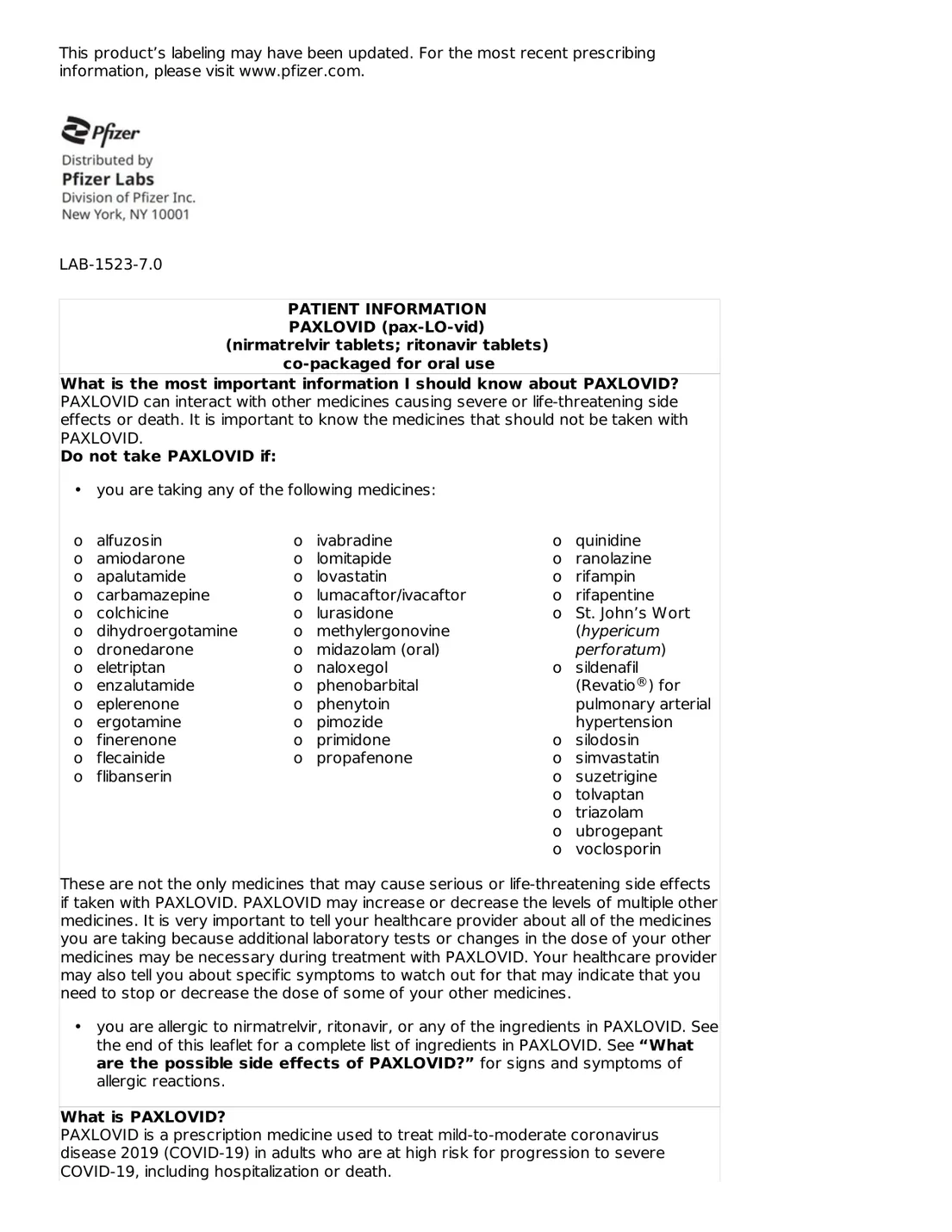
Một nhãn thuốc được viết cho người kê đơn, với phần dành cho bệnh nhân trên trang 35 đến 41

Phần lớn trong số 68 trang là dành cho bác sĩ: bảng liều lượng, tương tác thuốc, nghiên cứu lâm sàng. Phần viết cho bệnh nhân bắt đầu ở trang 35, và trang 35 cũng chứa danh sách 40 loại thuốc không được dùng chung với loại thuốc này, được đặt trong ba cột.

Bệnh nhân mắc bệnh thận nhận được một gói khác: liều thấp hơn hai lần mỗi ngày, hoặc, đối với bệnh thận nặng, một gói mỗi ngày một lần với Ngày 1 khác. Làm đúng điều đó là mục đích của tờ rơi này.

Tệp PDF có văn bản thực bên trong, vì vậy đã đọc nguyên bản: không OCR, không chuyển đổi. Bản thân tệp PDF không bị thay đổi.

Hình từ tài liệu gốcTrang 35 của nhãn: phần bắt đầu của Thông tin Bệnh nhân và danh sách các loại thuốc không được dùng
Trang 35: Thông tin Bệnh nhân bắt đầu, với 40 loại thuốc không được dùng.Mở bản gốc

02 · YÊU CẦU 1

"Viết một tờ rơi mang về nhà dài 2 trang từ nhãn thuốc"

Những gì hiệu thuốc đã gõ

Attached is the current PAXLOVID US label from DailyMed (68 pages; the Patient Information leaflet is on pages 35-41). Please write a 2-page take-home leaflet for our COVID-19 patients as a Word document.

Use only what the label says, in plain English (short sentences, about 6th-8th grade reading level). Sections, in this order:
1. What PAXLOVID is - including that it is not approved to prevent COVID-19
2. Before you start - kidney or liver problems, HIV-1, pregnancy, breastfeeding, hormonal birth control
3. How to take it - the standard Dose Pack, the two Dose Packs for kidney disease, and what to do if you miss a dose
4. Medicines you must not take with PAXLOVID - all 40 medicines from the 'Do not take PAXLOVID if' list on page 35, in a 3-column table
5. Side effects - the serious ones and the most common ones
6. When to get help right away

Letter size, 2 pages maximum.

Những gì đã làm

  • Đã đọc các trang Thông tin Bệnh nhân và ghi lại các sự kiện mà mỗi phần cần, với trang nguồn của chúng.
  • Đã viết sáu phần theo thứ tự được yêu cầu, bằng các câu ngắn, thành một tệp Word mới trên giấy Letter.
  • Đã cung cấp tất cả ba gói với viên nén: 2 viên hồng và 1 viên trắng hai lần mỗi ngày; 1 viên hồng và 1 viên trắng hai lần mỗi ngày đối với bệnh thận trung bình; và đối với bệnh thận nặng, 2 viên hồng và 1 viên trắng vào Ngày 1, sau đó 1 viên hồng và 1 viên trắng mỗi ngày một lần, sau khi lọc máu vào những ngày lọc máu.
  • Đã đặt 40 loại thuốc trong bảng 3 cột, giữ nguyên "midazolam (oral)" và "for pulmonary arterial hypertension" như cách nhãn thuốc diễn đạt.
  • Đã kiểm tra bố cục in trước khi bàn giao: hai trang.
PAXLOVID Take-Home Leaflet.docxtệp mới
PAXLOVID Take-Home Leaflet
1. What PAXLOVID is
PAXLOVID is a prescription medicine. It is used to treat mild-to-moderate coronavirus disease 2019 (COVID-19) in adults. It is for adults who are at high risk for progression to severe COVID-19. This includes hospitalization or death.
PAXLOVID is not approved to prevent COVID-19. Do not use it as pre-exposure treatment to prevent COVID-19 before exposure. Do not use it as post-exposure treatment to prevent COVID-19 after exposure.
Do not take PAXLOVID if you are allergic to nirmatrelvir, ritonavir, or any of the ingredients in PAXLOVID.
2. Before you start
Tell your care team before you start PAXLOVID if any of these apply to you:
Kidney problems. You may need a different dose or dosing schedule of PAXLOVID.
Liver problems, including hepatitis.
Human Immunodeficiency Virus 1 (HIV-1) infection. PAXLOVID may lead to some HIV-1 medicines not working as well in the future.
Are pregnant or plan to become pregnant. It is not known if PAXLOVID can harm your unborn baby. Tell your healthcare provider right away if you are or if you become pregnant.
Are breastfeeding or plan to breastfeed. PAXLOVID can pass into your breast milk. Talk to your healthcare provider about the best way to feed your baby during treatment with PAXLOVID.
Take combined birth control (hormonal contraceptive). Tell your healthcare provider. PAXLOVID may affect how your hormonal contraceptives work. Females who are able to become pregnant should use another effective alternative form of contraception or an additional barrier method of contraception during treatment with PAXLOVID.
3. How to take it
PAXLOVID consists of 2 medicines: nirmatrelvir tablets and ritonavir tablets. The 2 medicines are taken together for 5 days.
Take PAXLOVID with or without food. Swallow the tablets whole. Do not chew, break, or crush the tablets.
Standard Dose Pack — 300 mg; 100 mg: Each dose contains 3 tablets taken together twice daily, in the morning and at bedtime. Take the 2 pink nirmatrelvir tablets and 1 white to off-white ritonavir tablet together.
Kidney Dose Pack — 150 mg; 100 mg: Each dose contains 2 tablets taken together twice daily, in the morning and at bedtime. Take the 1 pink nirmatrelvir tablet and 1 white ritonavir tablet together.
Severe kidney once-daily pack — 300 mg; 100 mg (Day 1) and 150 mg; 100 mg (Days 2-5): Each dose is taken together once daily. Day 1 (First Day): Take the 2 pink nirmatrelvir tablets and 1 white ritonavir tablet together (Blue part of the blister card). Days 2-5: Take the 1 pink nirmatrelvir tablet and 1 white ritonavir tablet together (Pink part of the blister card). On days of dialysis, take PAXLOVID after receiving dialysis.
If you miss a dose within 8 hours, take it as soon as you remember. If you miss a dose by more than 8 hours, skip it and take the next dose at your regular time. Do not take 2 doses of PAXLOVID at the same time.
4. Medicines you must not take with PAXLOVID
Warning: PAXLOVID can interact with other medicines causing severe or life-threatening side effects or death. Do not take any medicine in this table with PAXLOVID.
Trang 2
Medicine A–MMedicine N–RMedicine S–V
alfuzosinivabradineranolazine
amiodaronelomitapiderifampin
apalutamidelovastatinrifapentine
carbamazepinelumacaftor/ivacaftorSt. John’s Wort (hypericum perforatum)
colchicinelurasidonesildenafil (Revatio ® ) for pulmonary arterial hypertension
dihydroergotaminemethylergonovinesilodosin
dronedaronemidazolam (oral)simvastatin
eletriptannaloxegolsuzetrigine
enzalutamidephenobarbitaltolvaptan
eplerenonephenytointriazolam
ergotaminepimozideubrogepant
finerenoneprimidonevoclosporin
flecainidepropafenone
flibanserinquinidine
5. Side effects
PAXLOVID can cause side effects. Some are serious. Others are more common and less serious.
5.1 Serious allergic reactions
Allergic reactions have happened during treatment with PAXLOVID. These include severe allergic reactions (anaphylaxis). Signs of an allergic reaction are:
skin rash
hives
blisters or peeling skin
painful sores or ulcers in the mouth, nose, throat or genital area
swelling of the mouth, lips, tongue or face
trouble swallowing or breathing
throat tightness
hoarseness
5.2 Liver problems
Liver problems can happen during treatment with PAXLOVID. Signs of liver problems are:
loss of appetite
yellowing of your skin and the white of eyes
dark-colored urine
pale colored stools
itchy skin
stomach-area (abdominal) pain
5.3 Common side effects
The most common side effects of PAXLOVID include altered sense of taste and diarrhea. The altered taste may be metallic taste. It may be bitter taste.
Other possible side effects include headache, vomiting, stomach (abdominal) pain, nausea, high blood pressure, and feeling generally unwell.
6. When to get help right away
Stop taking PAXLOVID and get emergency help right away if you get any signs of an allergy. You can find these signs in Side effects. Do not keep taking PAXLOVID after allergy signs start.
Call your healthcare provider right away if you get any signs of liver problems during treatment with PAXLOVID. You can find these signs in Side effects.
If you take too much PAXLOVID, call your healthcare provider or go to the nearest hospital emergency room right away.
Talk to your healthcare provider if you do not feel better after 5 days. Talk to your healthcare provider also if you feel worse after 5 days.
Tờ rơi được gửi đi. Đường đứt nét là nơi Word chuyển sang trang 2.

Chúng tôi đã kiểm tra nó đối chiếu với nhãn thuốc: mọi liều lượng và gói thuốc khớp với tóm tắt trên nhãn trang 1 và hình ảnh gói thuốc trên trang 38 và 39; quy tắc quên liều là 8 giờ theo nhãn thuốc; bảng chứa chính xác 40 loại thuốc ở trang 35, không thiếu, không thừa; được bố cục theo quy tắc của Word và LibreOffice, tệp in được trên hai trang Letter.

03 · YÊU CẦU 2

"Ba sửa đổi từ dược sĩ, sau đó là bản tiếng Tây Ban Nha"

Những gì hiệu thuốc đã gõ

Pharmacist review of the English leaflet - please edit that same file:
1. Add a shaded box at the very top that reads exactly: 'Tell every doctor and pharmacist you are taking PAXLOVID.'
2. In 'How to take it', add that the tablets must be swallowed whole (do not chew, break or crush them) and can be taken with or without food.
3. Directly under the medicines table, add: 'This is not a complete list. Ask your pharmacist before you start any new medicine.'
Leave everything else as it is.

Then make a Spanish copy of the updated leaflet as a separate Word file: same sections, same table, still 2 pages. Use 'usted' throughout, keep the brand name PAXLOVID and the drug names unchanged, and keep every dose and number exactly as in the English.

Những gì đã làm

  • Đã mở tờ rơi đã tạo và chỉnh sửa chính tệp đó.
  • Đã thêm câu ở ngay trên cùng dưới dạng một khung tô nền, nguyên văn.
  • Để nguyên phần "Cách dùng": tờ rơi đã nêu rõ nuốt cả viên và thuốc có thể uống kèm hoặc không kèm thức ăn.
  • Đã thêm dòng "đây không phải là danh sách đầy đủ" trực tiếp dưới bảng, bên ngoài bảng.
  • Đã tạo bản sao tiếng Tây Ban Nha thành một tệp Word riêng biệt từ tờ rơi đã chỉnh sửa: sử dụng "usted" xuyên suốt, giữ nguyên tên thuốc và mọi con số như trong bản tiếng Anh.
PAXLOVID Take-Home Leaflet.docxsau khi sửa
được thêm vào trong yêu cầu 2Tell every doctor and pharmacist you are taking PAXLOVID.
PAXLOVID Take-Home Leaflet
1. What PAXLOVID is
PAXLOVID is a prescription medicine. It is used to treat mild-to-moderate coronavirus disease 2019 (COVID-19) in adults. It is for adults who are at high risk for progression to severe COVID-19. This includes hospitalization or death.
PAXLOVID is not approved to prevent COVID-19. Do not use it as pre-exposure treatment to prevent COVID-19 before exposure. Do not use it as post-exposure treatment to prevent COVID-19 after exposure.
Do not take PAXLOVID if you are allergic to nirmatrelvir, ritonavir, or any of the ingredients in PAXLOVID.
2. Before you start
Tell your care team before you start PAXLOVID if any of these apply to you:
Kidney problems. You may need a different dose or dosing schedule of PAXLOVID.
Liver problems, including hepatitis.
Human Immunodeficiency Virus 1 (HIV-1) infection. PAXLOVID may lead to some HIV-1 medicines not working as well in the future.
Are pregnant or plan to become pregnant. It is not known if PAXLOVID can harm your unborn baby. Tell your healthcare provider right away if you are or if you become pregnant.
Are breastfeeding or plan to breastfeed. PAXLOVID can pass into your breast milk. Talk to your healthcare provider about the best way to feed your baby during treatment with PAXLOVID.
Take combined birth control (hormonal contraceptive). Tell your healthcare provider. PAXLOVID may affect how your hormonal contraceptives work. Females who are able to become pregnant should use another effective alternative form of contraception or an additional barrier method of contraception during treatment with PAXLOVID.
3. How to take it
PAXLOVID consists of 2 medicines: nirmatrelvir tablets and ritonavir tablets. The 2 medicines are taken together for 5 days.
Take PAXLOVID with or without food. Swallow the tablets whole. Do not chew, break, or crush the tablets.
Standard Dose Pack — 300 mg; 100 mg: Each dose contains 3 tablets taken together twice daily, in the morning and at bedtime. Take the 2 pink nirmatrelvir tablets and 1 white to off-white ritonavir tablet together.
Kidney Dose Pack — 150 mg; 100 mg: Each dose contains 2 tablets taken together twice daily, in the morning and at bedtime. Take the 1 pink nirmatrelvir tablet and 1 white ritonavir tablet together.
Severe kidney once-daily pack — 300 mg; 100 mg (Day 1) and 150 mg; 100 mg (Days 2-5): Each dose is taken together once daily. Day 1 (First Day): Take the 2 pink nirmatrelvir tablets and 1 white ritonavir tablet together (Blue part of the blister card). Days 2-5: Take the 1 pink nirmatrelvir tablet and 1 white ritonavir tablet together (Pink part of the blister card). On days of dialysis, take PAXLOVID after receiving dialysis.
If you miss a dose within 8 hours, take it as soon as you remember. If you miss a dose by more than 8 hours, skip it and take the next dose at your regular time. Do not take 2 doses of PAXLOVID at the same time.
4. Medicines you must not take with PAXLOVID
Warning: PAXLOVID can interact with other medicines causing severe or life-threatening side effects or death. Do not take any medicine in this table with PAXLOVID.
Trang 2
Medicine A–MMedicine N–RMedicine S–V
alfuzosinivabradineranolazine
amiodaronelomitapiderifampin
apalutamidelovastatinrifapentine
carbamazepinelumacaftor/ivacaftorSt. John’s Wort (hypericum perforatum)
colchicinelurasidonesildenafil (Revatio ® ) for pulmonary arterial hypertension
dihydroergotaminemethylergonovinesilodosin
dronedaronemidazolam (oral)simvastatin
eletriptannaloxegolsuzetrigine
enzalutamidephenobarbitaltolvaptan
eplerenonephenytointriazolam
ergotaminepimozideubrogepant
finerenoneprimidonevoclosporin
flecainidepropafenone
flibanserinquinidine
được thêm vào trong yêu cầu 2This is not a complete list. Ask your pharmacist before you start any new medicine.
5. Side effects
PAXLOVID can cause side effects. Some are serious. Others are more common and less serious.
5.1 Serious allergic reactions
Allergic reactions have happened during treatment with PAXLOVID. These include severe allergic reactions (anaphylaxis). Signs of an allergic reaction are:
skin rash
hives
blisters or peeling skin
painful sores or ulcers in the mouth, nose, throat or genital area
swelling of the mouth, lips, tongue or face
trouble swallowing or breathing
throat tightness
hoarseness
5.2 Liver problems
Liver problems can happen during treatment with PAXLOVID. Signs of liver problems are:
loss of appetite
yellowing of your skin and the white of eyes
dark-colored urine
pale colored stools
itchy skin
stomach-area (abdominal) pain
5.3 Common side effects
The most common side effects of PAXLOVID include altered sense of taste and diarrhea. The altered taste may be metallic taste. It may be bitter taste.
Other possible side effects include headache, vomiting, stomach (abdominal) pain, nausea, high blood pressure, and feeling generally unwell.
6. When to get help right away
Stop taking PAXLOVID and get emergency help right away if you get any signs of an allergy. You can find these signs in Side effects. Do not keep taking PAXLOVID after allergy signs start.
Call your healthcare provider right away if you get any signs of liver problems during treatment with PAXLOVID. You can find these signs in Side effects.
If you take too much PAXLOVID, call your healthcare provider or go to the nearest hospital emergency room right away.
Talk to your healthcare provider if you do not feel better after 5 days. Talk to your healthcare provider also if you feel worse after 5 days.
Tờ rơi tương tự sau yêu cầu 2. Hai phần bổ sung được đánh dấu bằng màu xanh lục; không có gì khác thay đổi.
PAXLOVID Folleto para llevar a casa.docxtệp mới
Informe a cada médico y farmacéutico que usted está tomando PAXLOVID.
Folleto de PAXLOVID para llevar a casa
1. Qué es PAXLOVID
PAXLOVID es un medicamento recetado. Se usa para tratar la enfermedad por coronavirus 2019 (COVID-19) de leve a moderada en adultos. Es para adultos que tienen un riesgo alto de progresión a COVID-19 grave. Esto incluye hospitalización o muerte.
PAXLOVID no está aprobado para prevenir la COVID-19. No lo use como tratamiento previo a la exposición para prevenir la COVID-19 antes de la exposición. No lo use como tratamiento posterior a la exposición para prevenir la COVID-19 después de la exposición.
No tome PAXLOVID si usted es alérgico a nirmatrelvir, ritonavir o a cualquiera de los ingredientes de PAXLOVID.
2. Antes de que usted empiece
Informe a su equipo de atención médica antes de empezar a tomar PAXLOVID si alguna de estas situaciones aplica a usted:
Problemas de riñón. Es posible que usted necesite una dosis o un horario de dosis diferente de PAXLOVID.
Problemas de hígado, incluida la hepatitis.
Infección por el virus de la inmunodeficiencia humana 1 (HIV-1). PAXLOVID puede hacer que algunos medicamentos contra el HIV-1 no funcionen tan bien en el futuro.
Si usted está embarazada o planea quedar embarazada. No se sabe si PAXLOVID puede dañar a su bebé por nacer. Informe a su proveedor de atención médica de inmediato si usted está embarazada o si queda embarazada.
Si usted está amamantando o planea amamantar. PAXLOVID puede pasar a su leche materna. Hable con su proveedor de atención médica sobre la mejor forma de alimentar a su bebé durante el tratamiento con PAXLOVID.
Si usted toma anticonceptivos combinados (anticonceptivo hormonal). Informe a su proveedor de atención médica. PAXLOVID puede afectar cómo funcionan sus anticonceptivos hormonales. Las mujeres que pueden quedar embarazadas deben usar otra forma anticonceptiva alternativa eficaz o un método anticonceptivo de barrera adicional durante el tratamiento con PAXLOVID.
3. Cómo lo debe tomar usted
PAXLOVID consta de 2 medicamentos: tabletas de nirmatrelvir y tabletas de ritonavir. Los 2 medicamentos se toman juntos durante 5 días.
Tome PAXLOVID con o sin alimentos. Trague las tabletas enteras. No las mastique, parta ni triture.
Paquete de dosis estándar — 300 mg; 100 mg: Cada dosis contiene 3 tabletas que se toman juntas dos veces al día, por la mañana y antes de acostarse. Tome las 2 tabletas rosas de nirmatrelvir y 1 tableta de ritonavir de blanca a blanquecina juntas.
Paquete de dosis para el riñón — 150 mg; 100 mg: Cada dosis contiene 2 tabletas que se toman juntas dos veces al día, por la mañana y antes de acostarse. Tome 1 tableta rosa de nirmatrelvir y 1 tableta blanca de ritonavir juntas.
Paquete de una vez al día para riñón grave — 300 mg; 100 mg (Día 1) y 150 mg; 100 mg (Días 2-5): Cada dosis se toma junta una vez al día. Día 1 (Primer día): Tome las 2 tabletas rosas de nirmatrelvir y 1 tableta blanca de ritonavir juntas (parte azul del blíster). Días 2-5: Tome 1 tableta rosa de nirmatrelvir y 1 tableta blanca de ritonavir juntas (parte rosa del blíster). En los días de diálisis, tome PAXLOVID después de recibir la diálisis.
Si olvida una dosis y han pasado menos de 8 horas, tómela tan pronto como lo recuerde. Si han pasado más de 8 horas, omita esa dosis y tome la siguiente dosis a su hora habitual. No tome 2 dosis de PAXLOVID al mismo tiempo.
4. Medicamentos que usted no debe tomar con PAXLOVID
Advertencia: PAXLOVID puede interactuar con otros medicamentos y causar efectos secundarios graves o potencialmente mortales, o la muerte. No tome ningún medicamento de esta tabla con PAXLOVID.
Trang 2
Medicamentos A–MMedicamentos N–RMedicamentos S–V
alfuzosinivabradineranolazine
amiodaronelomitapiderifampin
apalutamidelovastatinrifapentine
carbamazepinelumacaftor/ivacaftorSt. John’s Wort (hypericum perforatum)
colchicinelurasidonesildenafil (Revatio ® ) para la hipertensión arterial pulmonar
dihydroergotaminemethylergonovinesilodosin
dronedaronemidazolam (oral)simvastatin
eletriptannaloxegolsuzetrigine
enzalutamidephenobarbitaltolvaptan
eplerenonephenytointriazolam
ergotaminepimozideubrogepant
finerenoneprimidonevoclosporin
flecainidepropafenone
flibanserinquinidine
Esta no es una lista completa. Pregunte a su farmacéutico antes de empezar a tomar cualquier medicamento nuevo.
5. Efectos secundarios
PAXLOVID puede causar efectos secundarios. Algunos son graves. Otros son más comunes y menos graves.
5.1 Reacciones alérgicas graves
Se han producido reacciones alérgicas durante el tratamiento con PAXLOVID. Estas incluyen reacciones alérgicas graves (anafilaxia). Los signos de una reacción alérgica son:
erupción en la piel
ronchas
ampollas o descamación de la piel
llagas o úlceras dolorosas en la boca, la nariz, la garganta o la zona genital
hinchazón de la boca, los labios, la lengua o la cara
dificultad para tragar o respirar
opresión en la garganta
ronquera
5.2 Problemas del hígado
Pueden presentarse problemas del hígado durante el tratamiento con PAXLOVID. Los signos de problemas del hígado son:
pérdida del apetito
color amarillento en su piel y en la parte blanca de sus ojos
orina de color oscuro
heces de color pálido
picazón en la piel
dolor en el área del estómago (abdominal)
5.3 Efectos secundarios comunes
Los efectos secundarios más comunes de PAXLOVID incluyen alteración del sentido del gusto y diarrea. La alteración del gusto puede ser un sabor metálico. Puede ser un sabor amargo.
Otros posibles efectos secundarios incluyen dolor de cabeza, vómitos, dolor de estómago (abdominal), náuseas, presión arterial alta y sensación general de malestar.
6. Cuándo debe usted buscar ayuda de inmediato
Deje de tomar PAXLOVID y busque ayuda de emergencia de inmediato si usted presenta algún signo de alergia. Usted puede encontrar estos signos en Efectos secundarios. No siga tomando PAXLOVID después de que comiencen los signos de alergia.
Trang 3 · vượt giới hạn 2 trang
Llame a su proveedor de atención médica de inmediato si usted presenta algún signo de problemas del hígado durante el tratamiento con PAXLOVID. Usted puede encontrar estos signos en Efectos secundarios.
Si usted toma demasiado PAXLOVID, llame a su proveedor de atención médica o vaya a la sala de emergencias del hospital más cercano de inmediato.
Hable con su proveedor de atención médica si usted no se siente mejor después de 5 días. Hable con su proveedor de atención médica también si usted se siente peor después de 5 días.
Bản sao tiếng Tây Ban Nha, một tệp riêng biệt. Các đường đứt nét là nơi Word chuyển trang.

Chúng tôi đã kiểm tra nó: sự khác biệt duy nhất so với yêu cầu 1 là khung và dòng dưới bảng; bản tiếng Anh vẫn in trên hai trang; bản sao tiếng Tây Ban Nha có cùng 40 loại thuốc, cùng liều lượng (150 mg, 100 mg, 5 días, 8 horas) và không có dạng "tú".

Điều đáng biết: Tiếng Tây Ban Nha dài hơn tiếng Anh. Được bố cục theo quy tắc của Word, bản sao tiếng Tây Ban Nha tràn sáu dòng sang trang thứ ba (LibreOffice vừa vặn trên hai trang). Phản hồi của đã nói như vậy thay vì tuyên bố là hai trang; việc cắt bớt một câu hoặc lề trong Word sẽ đưa nó trở lại bình thường.

Từ nhãn thuốc dài thành tờ rơi bệnh nhân có thể đọc

Hầu hết các công cụ AI đều viết tóm tắt trong một cuộc trò chuyện. viết tờ rơi thành một tệp Word thực tế, kiểm tra số trang được in ra, tiếp nhận các chỉnh sửa của dược sĩ trong cùng tệp đó và cung cấp cho bạn một bản dịch với mọi liều lượng được giữ nguyên.

ĐỌC TIẾP

Đọc ví dụ thực tế khác
Xem tất cả 19 ví dụ thực tế Tất cả ví dụ dành cho Y tế