EXEMPLE PRATIQUE · DU PDF AU WORD, PUIS À L'ESPAGNOL

Étiquette de médicament de 68 pages transformée en une notice patient de 2 pages, puis en espagnol

Une pharmacie hospitalière a reçu de DailyMed l'étiquette américaine de 68 pages d'un médicament contre la COVID-19. Elle a demandé à d'en faire une notice de 2 pages à emporter, rédigée en anglais simple, uniquement à partir de ce que dit l'étiquette, avec dans un seul tableau les 40 médicaments que les patients ne doivent pas prendre.

a lu les pages patient de l'étiquette et a rédigé la notice sous forme de fichier Word imprimable sur deux pages Letter. Puis les trois modifications du pharmacien ont été intégrées dans ce même fichier, et a réalisé une copie en espagnol avec les mêmes sections, le même tableau et chaque dosage intact.

  • 68pages d'étiquettes à traiter
  • 40médicaments du tableau, ni supprimés ni ajoutés
  • 2Pages au format Letter, mesurées sur la mise en page imprimée
  • 0lignes de la demande 1 modifiées par les corrections du pharmacien

Ouvrir les vrais fichiers

Il s'agit des fichiers réels de l'exécution. Téléchargez-les et ouvrez-les dans Word.

Origine du fichier : DailyMed (Bibliothèque nationale de médecine des États-Unis), étiquette approuvée par la FDA pour les comprimés de nirmatrelvir et de ritonavir, révisée en 02/2026. Le détenteur de l'étiquette n'a ni examiné ni approuvé cet exemple, et la notice ne constitue pas un avis médical : les patients doivent suivre les instructions de leur propre prescripteur.

01 · LE FICHIER DE DÉPART

Une étiquette destinée aux prescripteurs, avec la partie patient située entre les pages 35 et 41

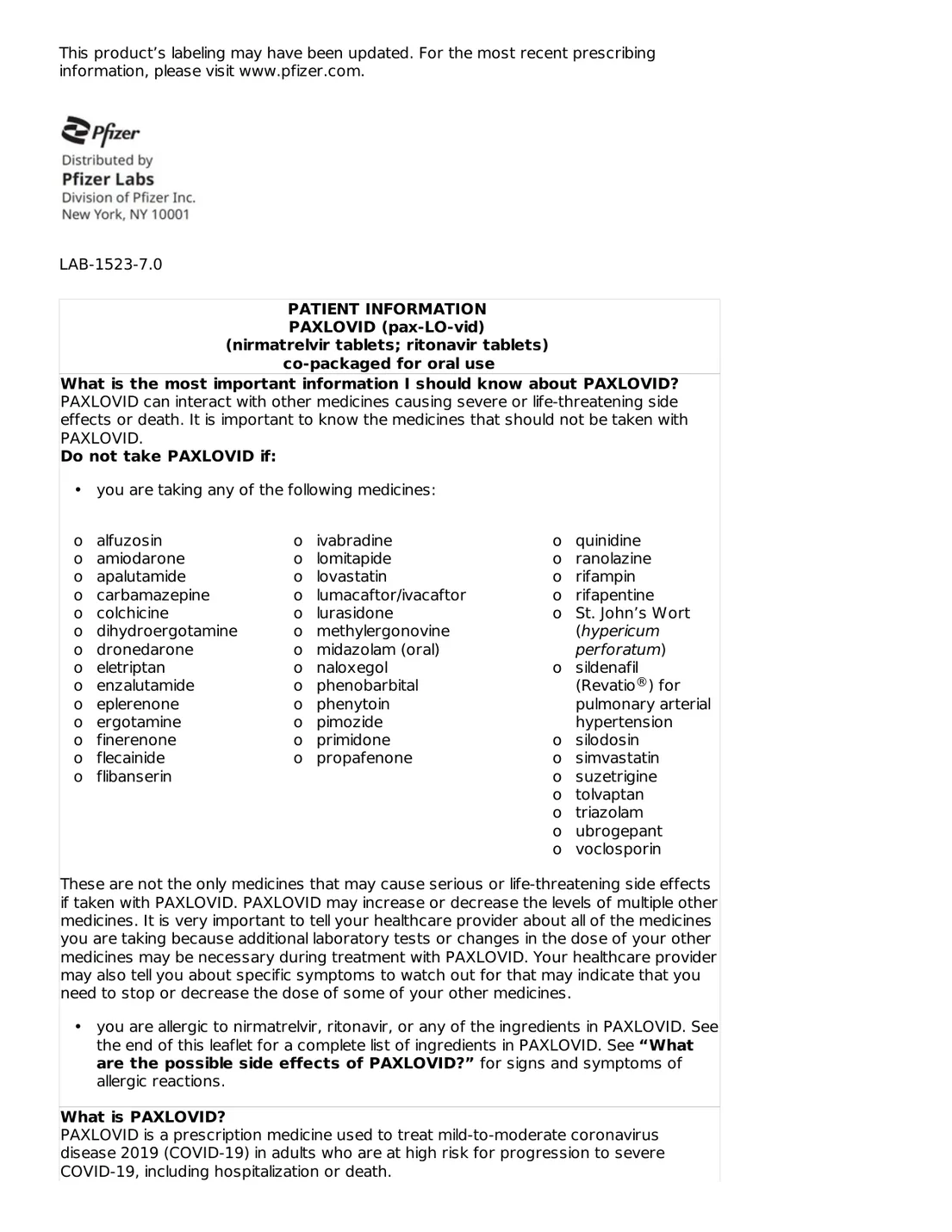
La majeure partie des 68 pages est destinée aux médecins : tableaux posologiques, interactions médicamenteuses, études cliniques. La partie destinée aux patients commence à la page 35, qui contient également la liste des 40 médicaments à ne pas prendre avec celui-ci, disposée en trois colonnes.

Les patients atteints de maladie rénale reçoivent un autre conditionnement : une dose plus faible deux fois par jour ou, en cas de maladie rénale sévère, un conditionnement à une prise par jour avec un premier jour différent. Bien présenter ce point est précisément l'enjeu de la notice.

Le PDF contient du texte réel, donc l'a lu tel quel : pas d'OCR, pas de conversion. Le PDF lui-même n'a pas été modifié.

Image du document sourceÉtiquette, page 35 : début des informations patient et liste des médicaments contre-indiqués
Page 35 : début des informations patient, avec les 40 médicaments contre-indiqués.Ouvrir l'original

02 · DEMANDE 1

« Rédiger une notice d'information patient de 2 pages à partir de l'étiquette »

Ce que la pharmacie a tapé

Attached is the current PAXLOVID US label from DailyMed (68 pages; the Patient Information leaflet is on pages 35-41). Please write a 2-page take-home leaflet for our COVID-19 patients as a Word document.

Use only what the label says, in plain English (short sentences, about 6th-8th grade reading level). Sections, in this order:
1. What PAXLOVID is - including that it is not approved to prevent COVID-19
2. Before you start - kidney or liver problems, HIV-1, pregnancy, breastfeeding, hormonal birth control
3. How to take it - the standard Dose Pack, the two Dose Packs for kidney disease, and what to do if you miss a dose
4. Medicines you must not take with PAXLOVID - all 40 medicines from the 'Do not take PAXLOVID if' list on page 35, in a 3-column table
5. Side effects - the serious ones and the most common ones
6. When to get help right away

Letter size, 2 pages maximum.

Ce qu'a fait

  • Lecture des pages d'informations patient et classement des données nécessaires par section, avec leur page d'origine.
  • Rédaction des six sections dans l'ordre demandé, en phrases courtes, sous forme de nouveau fichier Word au format Letter.
  • Fourniture des trois conditionnements avec leurs comprimés : 2 roses et 1 blanc deux fois par jour ; 1 rose et 1 blanc deux fois par jour en cas d'insuffisance rénale modérée ; et pour l'insuffisance rénale sévère, 2 roses et 1 blanc le premier jour, puis 1 rose et 1 blanc une fois par jour, après la dialyse les jours de dialyse.
  • Mise des 40 médicaments dans un tableau à 3 colonnes, en conservant « midazolam (oral) » et « for pulmonary arterial hypertension » tels qu'indiqués sur l'étiquette.
  • Vérification de la mise en page avant livraison : deux pages.
PAXLOVID Take-Home Leaflet.docxnouveau fichier
PAXLOVID Take-Home Leaflet
1. What PAXLOVID is
PAXLOVID is a prescription medicine. It is used to treat mild-to-moderate coronavirus disease 2019 (COVID-19) in adults. It is for adults who are at high risk for progression to severe COVID-19. This includes hospitalization or death.
PAXLOVID is not approved to prevent COVID-19. Do not use it as pre-exposure treatment to prevent COVID-19 before exposure. Do not use it as post-exposure treatment to prevent COVID-19 after exposure.
Do not take PAXLOVID if you are allergic to nirmatrelvir, ritonavir, or any of the ingredients in PAXLOVID.
2. Before you start
Tell your care team before you start PAXLOVID if any of these apply to you:
Kidney problems. You may need a different dose or dosing schedule of PAXLOVID.
Liver problems, including hepatitis.
Human Immunodeficiency Virus 1 (HIV-1) infection. PAXLOVID may lead to some HIV-1 medicines not working as well in the future.
Are pregnant or plan to become pregnant. It is not known if PAXLOVID can harm your unborn baby. Tell your healthcare provider right away if you are or if you become pregnant.
Are breastfeeding or plan to breastfeed. PAXLOVID can pass into your breast milk. Talk to your healthcare provider about the best way to feed your baby during treatment with PAXLOVID.
Take combined birth control (hormonal contraceptive). Tell your healthcare provider. PAXLOVID may affect how your hormonal contraceptives work. Females who are able to become pregnant should use another effective alternative form of contraception or an additional barrier method of contraception during treatment with PAXLOVID.
3. How to take it
PAXLOVID consists of 2 medicines: nirmatrelvir tablets and ritonavir tablets. The 2 medicines are taken together for 5 days.
Take PAXLOVID with or without food. Swallow the tablets whole. Do not chew, break, or crush the tablets.
Standard Dose Pack — 300 mg; 100 mg: Each dose contains 3 tablets taken together twice daily, in the morning and at bedtime. Take the 2 pink nirmatrelvir tablets and 1 white to off-white ritonavir tablet together.
Kidney Dose Pack — 150 mg; 100 mg: Each dose contains 2 tablets taken together twice daily, in the morning and at bedtime. Take the 1 pink nirmatrelvir tablet and 1 white ritonavir tablet together.
Severe kidney once-daily pack — 300 mg; 100 mg (Day 1) and 150 mg; 100 mg (Days 2-5): Each dose is taken together once daily. Day 1 (First Day): Take the 2 pink nirmatrelvir tablets and 1 white ritonavir tablet together (Blue part of the blister card). Days 2-5: Take the 1 pink nirmatrelvir tablet and 1 white ritonavir tablet together (Pink part of the blister card). On days of dialysis, take PAXLOVID after receiving dialysis.
If you miss a dose within 8 hours, take it as soon as you remember. If you miss a dose by more than 8 hours, skip it and take the next dose at your regular time. Do not take 2 doses of PAXLOVID at the same time.
4. Medicines you must not take with PAXLOVID
Warning: PAXLOVID can interact with other medicines causing severe or life-threatening side effects or death. Do not take any medicine in this table with PAXLOVID.
Page 2
Medicine A–MMedicine N–RMedicine S–V
alfuzosinivabradineranolazine
amiodaronelomitapiderifampin
apalutamidelovastatinrifapentine
carbamazepinelumacaftor/ivacaftorSt. John’s Wort (hypericum perforatum)
colchicinelurasidonesildenafil (Revatio ® ) for pulmonary arterial hypertension
dihydroergotaminemethylergonovinesilodosin
dronedaronemidazolam (oral)simvastatin
eletriptannaloxegolsuzetrigine
enzalutamidephenobarbitaltolvaptan
eplerenonephenytointriazolam
ergotaminepimozideubrogepant
finerenoneprimidonevoclosporin
flecainidepropafenone
flibanserinquinidine
5. Side effects
PAXLOVID can cause side effects. Some are serious. Others are more common and less serious.
5.1 Serious allergic reactions
Allergic reactions have happened during treatment with PAXLOVID. These include severe allergic reactions (anaphylaxis). Signs of an allergic reaction are:
skin rash
hives
blisters or peeling skin
painful sores or ulcers in the mouth, nose, throat or genital area
swelling of the mouth, lips, tongue or face
trouble swallowing or breathing
throat tightness
hoarseness
5.2 Liver problems
Liver problems can happen during treatment with PAXLOVID. Signs of liver problems are:
loss of appetite
yellowing of your skin and the white of eyes
dark-colored urine
pale colored stools
itchy skin
stomach-area (abdominal) pain
5.3 Common side effects
The most common side effects of PAXLOVID include altered sense of taste and diarrhea. The altered taste may be metallic taste. It may be bitter taste.
Other possible side effects include headache, vomiting, stomach (abdominal) pain, nausea, high blood pressure, and feeling generally unwell.
6. When to get help right away
Stop taking PAXLOVID and get emergency help right away if you get any signs of an allergy. You can find these signs in Side effects. Do not keep taking PAXLOVID after allergy signs start.
Call your healthcare provider right away if you get any signs of liver problems during treatment with PAXLOVID. You can find these signs in Side effects.
If you take too much PAXLOVID, call your healthcare provider or go to the nearest hospital emergency room right away.
Talk to your healthcare provider if you do not feel better after 5 days. Talk to your healthcare provider also if you feel worse after 5 days.
La notice telle que livrée. La ligne en pointillés indique où Word passe à la page 2.

Nous avons vérifié par rapport à l'étiquette : chaque dosage et conditionnement correspond au résumé de la page 1 de l'étiquette et à ses photos de conditionnement pages 38 et 39 ; la règle en cas d'oubli est celle de 8 heures de l'étiquette ; le tableau contient exactement les 40 médicaments de la page 35, sans omission ni ajout ; mis en page selon les règles de Word et LibreOffice, il s'imprime sur deux pages Letter.

03 · DEMANDE 2

« Trois modifications par le pharmacien, puis une copie en espagnol »

Ce que la pharmacie a tapé

Pharmacist review of the English leaflet - please edit that same file:
1. Add a shaded box at the very top that reads exactly: 'Tell every doctor and pharmacist you are taking PAXLOVID.'
2. In 'How to take it', add that the tablets must be swallowed whole (do not chew, break or crush them) and can be taken with or without food.
3. Directly under the medicines table, add: 'This is not a complete list. Ask your pharmacist before you start any new medicine.'
Leave everything else as it is.

Then make a Spanish copy of the updated leaflet as a separate Word file: same sections, same table, still 2 pages. Use 'usted' throughout, keep the brand name PAXLOVID and the drug names unchanged, and keep every dose and number exactly as in the English.

Ce qu'a fait

  • Ouverture de la notice créée et édition de ce même fichier.
  • Ajout de la phrase tout en haut dans un encadré grisé, mot pour mot.
  • Section « Comment le prendre » maintenue : la notice indiquait déjà qu'il fallait avaler les comprimés entiers et qu'ils pouvaient être pris avec ou sans nourriture.
  • Ajout de la ligne « Ceci n'est pas une liste exhaustive » directement sous le tableau, à l'extérieur de celui-ci.
  • Copie espagnole réalisée sous forme de fichier Word distinct à partir de la notice éditée : utilisation du vouvoiement (« usted »), noms des médicaments et chiffres identiques à la version anglaise.
PAXLOVID Take-Home Leaflet.docxaprès
ajouté lors de la demande 2Tell every doctor and pharmacist you are taking PAXLOVID.
PAXLOVID Take-Home Leaflet
1. What PAXLOVID is
PAXLOVID is a prescription medicine. It is used to treat mild-to-moderate coronavirus disease 2019 (COVID-19) in adults. It is for adults who are at high risk for progression to severe COVID-19. This includes hospitalization or death.
PAXLOVID is not approved to prevent COVID-19. Do not use it as pre-exposure treatment to prevent COVID-19 before exposure. Do not use it as post-exposure treatment to prevent COVID-19 after exposure.
Do not take PAXLOVID if you are allergic to nirmatrelvir, ritonavir, or any of the ingredients in PAXLOVID.
2. Before you start
Tell your care team before you start PAXLOVID if any of these apply to you:
Kidney problems. You may need a different dose or dosing schedule of PAXLOVID.
Liver problems, including hepatitis.
Human Immunodeficiency Virus 1 (HIV-1) infection. PAXLOVID may lead to some HIV-1 medicines not working as well in the future.
Are pregnant or plan to become pregnant. It is not known if PAXLOVID can harm your unborn baby. Tell your healthcare provider right away if you are or if you become pregnant.
Are breastfeeding or plan to breastfeed. PAXLOVID can pass into your breast milk. Talk to your healthcare provider about the best way to feed your baby during treatment with PAXLOVID.
Take combined birth control (hormonal contraceptive). Tell your healthcare provider. PAXLOVID may affect how your hormonal contraceptives work. Females who are able to become pregnant should use another effective alternative form of contraception or an additional barrier method of contraception during treatment with PAXLOVID.
3. How to take it
PAXLOVID consists of 2 medicines: nirmatrelvir tablets and ritonavir tablets. The 2 medicines are taken together for 5 days.
Take PAXLOVID with or without food. Swallow the tablets whole. Do not chew, break, or crush the tablets.
Standard Dose Pack — 300 mg; 100 mg: Each dose contains 3 tablets taken together twice daily, in the morning and at bedtime. Take the 2 pink nirmatrelvir tablets and 1 white to off-white ritonavir tablet together.
Kidney Dose Pack — 150 mg; 100 mg: Each dose contains 2 tablets taken together twice daily, in the morning and at bedtime. Take the 1 pink nirmatrelvir tablet and 1 white ritonavir tablet together.
Severe kidney once-daily pack — 300 mg; 100 mg (Day 1) and 150 mg; 100 mg (Days 2-5): Each dose is taken together once daily. Day 1 (First Day): Take the 2 pink nirmatrelvir tablets and 1 white ritonavir tablet together (Blue part of the blister card). Days 2-5: Take the 1 pink nirmatrelvir tablet and 1 white ritonavir tablet together (Pink part of the blister card). On days of dialysis, take PAXLOVID after receiving dialysis.
If you miss a dose within 8 hours, take it as soon as you remember. If you miss a dose by more than 8 hours, skip it and take the next dose at your regular time. Do not take 2 doses of PAXLOVID at the same time.
4. Medicines you must not take with PAXLOVID
Warning: PAXLOVID can interact with other medicines causing severe or life-threatening side effects or death. Do not take any medicine in this table with PAXLOVID.
Page 2
Medicine A–MMedicine N–RMedicine S–V
alfuzosinivabradineranolazine
amiodaronelomitapiderifampin
apalutamidelovastatinrifapentine
carbamazepinelumacaftor/ivacaftorSt. John’s Wort (hypericum perforatum)
colchicinelurasidonesildenafil (Revatio ® ) for pulmonary arterial hypertension
dihydroergotaminemethylergonovinesilodosin
dronedaronemidazolam (oral)simvastatin
eletriptannaloxegolsuzetrigine
enzalutamidephenobarbitaltolvaptan
eplerenonephenytointriazolam
ergotaminepimozideubrogepant
finerenoneprimidonevoclosporin
flecainidepropafenone
flibanserinquinidine
ajouté lors de la demande 2This is not a complete list. Ask your pharmacist before you start any new medicine.
5. Side effects
PAXLOVID can cause side effects. Some are serious. Others are more common and less serious.
5.1 Serious allergic reactions
Allergic reactions have happened during treatment with PAXLOVID. These include severe allergic reactions (anaphylaxis). Signs of an allergic reaction are:
skin rash
hives
blisters or peeling skin
painful sores or ulcers in the mouth, nose, throat or genital area
swelling of the mouth, lips, tongue or face
trouble swallowing or breathing
throat tightness
hoarseness
5.2 Liver problems
Liver problems can happen during treatment with PAXLOVID. Signs of liver problems are:
loss of appetite
yellowing of your skin and the white of eyes
dark-colored urine
pale colored stools
itchy skin
stomach-area (abdominal) pain
5.3 Common side effects
The most common side effects of PAXLOVID include altered sense of taste and diarrhea. The altered taste may be metallic taste. It may be bitter taste.
Other possible side effects include headache, vomiting, stomach (abdominal) pain, nausea, high blood pressure, and feeling generally unwell.
6. When to get help right away
Stop taking PAXLOVID and get emergency help right away if you get any signs of an allergy. You can find these signs in Side effects. Do not keep taking PAXLOVID after allergy signs start.
Call your healthcare provider right away if you get any signs of liver problems during treatment with PAXLOVID. You can find these signs in Side effects.
If you take too much PAXLOVID, call your healthcare provider or go to the nearest hospital emergency room right away.
Talk to your healthcare provider if you do not feel better after 5 days. Talk to your healthcare provider also if you feel worse after 5 days.
La même notice après la demande 2. Les deux ajouts sont marqués en vert ; rien d'autre n'a été modifié.
PAXLOVID Folleto para llevar a casa.docxnouveau fichier
Informe a cada médico y farmacéutico que usted está tomando PAXLOVID.
Folleto de PAXLOVID para llevar a casa
1. Qué es PAXLOVID
PAXLOVID es un medicamento recetado. Se usa para tratar la enfermedad por coronavirus 2019 (COVID-19) de leve a moderada en adultos. Es para adultos que tienen un riesgo alto de progresión a COVID-19 grave. Esto incluye hospitalización o muerte.
PAXLOVID no está aprobado para prevenir la COVID-19. No lo use como tratamiento previo a la exposición para prevenir la COVID-19 antes de la exposición. No lo use como tratamiento posterior a la exposición para prevenir la COVID-19 después de la exposición.
No tome PAXLOVID si usted es alérgico a nirmatrelvir, ritonavir o a cualquiera de los ingredientes de PAXLOVID.
2. Antes de que usted empiece
Informe a su equipo de atención médica antes de empezar a tomar PAXLOVID si alguna de estas situaciones aplica a usted:
Problemas de riñón. Es posible que usted necesite una dosis o un horario de dosis diferente de PAXLOVID.
Problemas de hígado, incluida la hepatitis.
Infección por el virus de la inmunodeficiencia humana 1 (HIV-1). PAXLOVID puede hacer que algunos medicamentos contra el HIV-1 no funcionen tan bien en el futuro.
Si usted está embarazada o planea quedar embarazada. No se sabe si PAXLOVID puede dañar a su bebé por nacer. Informe a su proveedor de atención médica de inmediato si usted está embarazada o si queda embarazada.
Si usted está amamantando o planea amamantar. PAXLOVID puede pasar a su leche materna. Hable con su proveedor de atención médica sobre la mejor forma de alimentar a su bebé durante el tratamiento con PAXLOVID.
Si usted toma anticonceptivos combinados (anticonceptivo hormonal). Informe a su proveedor de atención médica. PAXLOVID puede afectar cómo funcionan sus anticonceptivos hormonales. Las mujeres que pueden quedar embarazadas deben usar otra forma anticonceptiva alternativa eficaz o un método anticonceptivo de barrera adicional durante el tratamiento con PAXLOVID.
3. Cómo lo debe tomar usted
PAXLOVID consta de 2 medicamentos: tabletas de nirmatrelvir y tabletas de ritonavir. Los 2 medicamentos se toman juntos durante 5 días.
Tome PAXLOVID con o sin alimentos. Trague las tabletas enteras. No las mastique, parta ni triture.
Paquete de dosis estándar — 300 mg; 100 mg: Cada dosis contiene 3 tabletas que se toman juntas dos veces al día, por la mañana y antes de acostarse. Tome las 2 tabletas rosas de nirmatrelvir y 1 tableta de ritonavir de blanca a blanquecina juntas.
Paquete de dosis para el riñón — 150 mg; 100 mg: Cada dosis contiene 2 tabletas que se toman juntas dos veces al día, por la mañana y antes de acostarse. Tome 1 tableta rosa de nirmatrelvir y 1 tableta blanca de ritonavir juntas.
Paquete de una vez al día para riñón grave — 300 mg; 100 mg (Día 1) y 150 mg; 100 mg (Días 2-5): Cada dosis se toma junta una vez al día. Día 1 (Primer día): Tome las 2 tabletas rosas de nirmatrelvir y 1 tableta blanca de ritonavir juntas (parte azul del blíster). Días 2-5: Tome 1 tableta rosa de nirmatrelvir y 1 tableta blanca de ritonavir juntas (parte rosa del blíster). En los días de diálisis, tome PAXLOVID después de recibir la diálisis.
Si olvida una dosis y han pasado menos de 8 horas, tómela tan pronto como lo recuerde. Si han pasado más de 8 horas, omita esa dosis y tome la siguiente dosis a su hora habitual. No tome 2 dosis de PAXLOVID al mismo tiempo.
4. Medicamentos que usted no debe tomar con PAXLOVID
Advertencia: PAXLOVID puede interactuar con otros medicamentos y causar efectos secundarios graves o potencialmente mortales, o la muerte. No tome ningún medicamento de esta tabla con PAXLOVID.
Page 2
Medicamentos A–MMedicamentos N–RMedicamentos S–V
alfuzosinivabradineranolazine
amiodaronelomitapiderifampin
apalutamidelovastatinrifapentine
carbamazepinelumacaftor/ivacaftorSt. John’s Wort (hypericum perforatum)
colchicinelurasidonesildenafil (Revatio ® ) para la hipertensión arterial pulmonar
dihydroergotaminemethylergonovinesilodosin
dronedaronemidazolam (oral)simvastatin
eletriptannaloxegolsuzetrigine
enzalutamidephenobarbitaltolvaptan
eplerenonephenytointriazolam
ergotaminepimozideubrogepant
finerenoneprimidonevoclosporin
flecainidepropafenone
flibanserinquinidine
Esta no es una lista completa. Pregunte a su farmacéutico antes de empezar a tomar cualquier medicamento nuevo.
5. Efectos secundarios
PAXLOVID puede causar efectos secundarios. Algunos son graves. Otros son más comunes y menos graves.
5.1 Reacciones alérgicas graves
Se han producido reacciones alérgicas durante el tratamiento con PAXLOVID. Estas incluyen reacciones alérgicas graves (anafilaxia). Los signos de una reacción alérgica son:
erupción en la piel
ronchas
ampollas o descamación de la piel
llagas o úlceras dolorosas en la boca, la nariz, la garganta o la zona genital
hinchazón de la boca, los labios, la lengua o la cara
dificultad para tragar o respirar
opresión en la garganta
ronquera
5.2 Problemas del hígado
Pueden presentarse problemas del hígado durante el tratamiento con PAXLOVID. Los signos de problemas del hígado son:
pérdida del apetito
color amarillento en su piel y en la parte blanca de sus ojos
orina de color oscuro
heces de color pálido
picazón en la piel
dolor en el área del estómago (abdominal)
5.3 Efectos secundarios comunes
Los efectos secundarios más comunes de PAXLOVID incluyen alteración del sentido del gusto y diarrea. La alteración del gusto puede ser un sabor metálico. Puede ser un sabor amargo.
Otros posibles efectos secundarios incluyen dolor de cabeza, vómitos, dolor de estómago (abdominal), náuseas, presión arterial alta y sensación general de malestar.
6. Cuándo debe usted buscar ayuda de inmediato
Deje de tomar PAXLOVID y busque ayuda de emergencia de inmediato si usted presenta algún signo de alergia. Usted puede encontrar estos signos en Efectos secundarios. No siga tomando PAXLOVID después de que comiencen los signos de alergia.
Page 3 · dépasse la limite de 2 pages
Llame a su proveedor de atención médica de inmediato si usted presenta algún signo de problemas del hígado durante el tratamiento con PAXLOVID. Usted puede encontrar estos signos en Efectos secundarios.
Si usted toma demasiado PAXLOVID, llame a su proveedor de atención médica o vaya a la sala de emergencias del hospital más cercano de inmediato.
Hable con su proveedor de atención médica si usted no se siente mejor después de 5 días. Hable con su proveedor de atención médica también si usted se siente peor después de 5 días.
La copie espagnole, un fichier distinct. Les lignes en pointillés indiquent le saut de page Word.

Nous avons vérifié : les seules différences par rapport à la demande 1 sont l'encadré et la ligne sous le tableau ; l'anglais s'imprime toujours sur deux pages ; la copie espagnole contient les mêmes 40 médicaments, les mêmes dosages (150 mg, 100 mg, 5 días, 8 horas) et aucune forme de tutoiement.

Bon à savoir : L'espagnol est plus long que l'anglais. Mise en page selon les règles de Word, la copie espagnole déborde de six lignes sur une troisième page (LibreOffice tient sur deux). La réponse de l'a signalé au lieu de prétendre qu'elle faisait deux pages ; la suppression d'une phrase ou l'ajustement des marges dans Word permet de revenir à deux pages.

D'une étiquette longue à une notice accessible aux patients

La plupart des outils d'IA rédigent un résumé dans une fenêtre de chat. rédige la notice sous forme de fichier Word réel, vérifie la pagination à l'impression, intègre les modifications du pharmacien dans ce même fichier et fournit une copie traduite avec tous les dosages intacts.

POURSUIVRE LA LECTURE

Lire un autre exemple concret
Voir les 19 exemples concrets Tous les exemples pour Santé