PRZYKŁAD PRAKTYCZNY · PDF DO WORD, NASTĘPNIE HISZPAŃSKI

68-stronicowa ulotka leku przekształcona w 2-stronicową broszurę dla pacjenta, a następnie po hiszpańsku

Apteka szpitalna otrzymała z DailyMed 68-stronicową amerykańską etykietę leku na COVID-19. Poprosiła o przekształcenie jej w 2-stronicową ulotkę dla pacjenta do zabrania do domu, napisaną prostą angielszczyzną wyłącznie na podstawie treści etykiety, z wszystkimi 40 lekami, których pacjenci nie mogą przyjmować, w jednej tabeli.

przeczytało strony dla pacjenta z etykiety i napisało ulotkę jako plik Word, który mieści się na dwóch stronach Letter. Następnie trzy poprawki farmaceuty zostały wprowadzone do tego samego pliku, a przygotowało kopię po hiszpańsku z tymi samymi sekcjami, tą samą tabelą i każdą dawką niezmienioną.

  • 68strony etykiety do pracy
  • 40leki w tabeli, żaden nie został usunięty ani dodany
  • 2Strony formatu Letter, mierzone w układzie wydruku
  • 0wiersze 1. prośby zmienione przez edycję farmaceuty

Otwórz prawdziwe pliki

To są rzeczywiste pliki z przebiegu działania. Pobierz je i otwórz w programie Word.

Skąd pochodzi plik: DailyMed (U.S. National Library of Medicine), zatwierdzona przez FDA etykieta tabletek nirmatrelwiru i rytonawiru, zrewidowana w lutym 2026 r. Podmiot odpowiedzialny za etykietowanie nie recenzował ani nie zatwierdzał tego przykładu, a ulotka nie stanowi porady medycznej: pacjenci powinni postępować zgodnie z zaleceniami własnego lekarza prowadzącego.

01 · PLIK POCZĄTKOWY

Etykieta napisana dla lekarzy, z częścią dla pacjenta na stronach od 35 do 41

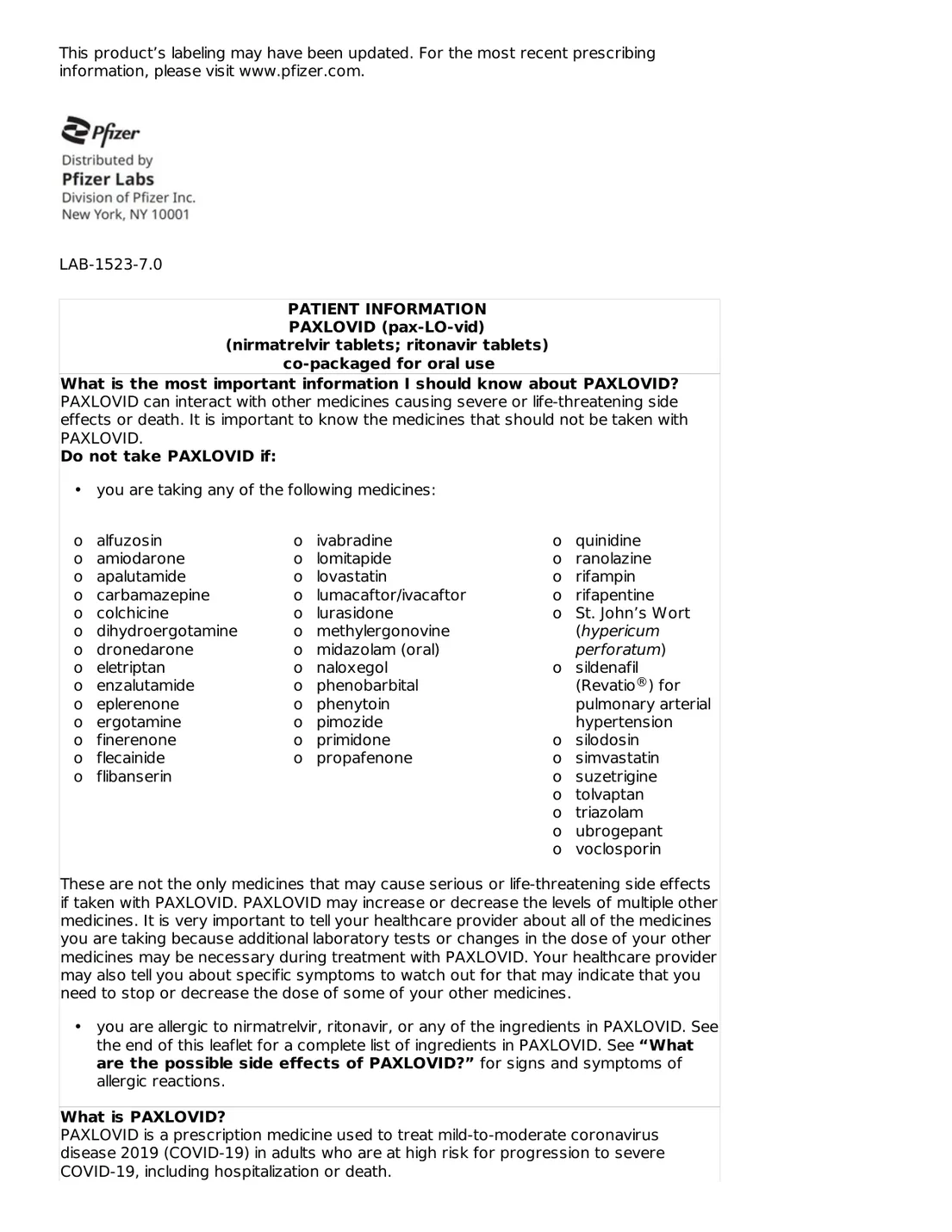
Większość z 68 stron jest przeznaczona dla lekarzy: tabele dawkowania, interakcje lekowe, badania kliniczne. Część napisana dla pacjentów zaczyna się na stronie 35, a strona 35 zawiera również listę 40 leków, których nie należy przyjmować z tym lekiem, w trzech kolumnach.

Pacjenci z chorobą nerek otrzymują inne opakowanie: niższą dawkę dwa razy dziennie lub, w przypadku ciężkiej choroby nerek, opakowanie raz dziennie z innym Dniem 1. Właściwe ujęcie tego jest istotą ulotki.

Plik PDF zawiera prawdziwy tekst, więc odczytało go w stanie niezmienionym: brak OCR, brak konwersji. Sam plik PDF nie został zmieniony.

Obraz dokumentu źródłowegoStrona 35 etykiety: początek Informacji dla Pacjenta i lista leków, których nie należy przyjmować
Strona 35: Informacje dla Pacjenta zaczynają się od listy 40 leków, których nie należy przyjmować.Otwórz oryginał

02 · PROŚBA 1

Napisz 2-stronicową ulotkę dla pacjenta na podstawie etykiety

Co wpisała apteka

Attached is the current PAXLOVID US label from DailyMed (68 pages; the Patient Information leaflet is on pages 35-41). Please write a 2-page take-home leaflet for our COVID-19 patients as a Word document.

Use only what the label says, in plain English (short sentences, about 6th-8th grade reading level). Sections, in this order:
1. What PAXLOVID is - including that it is not approved to prevent COVID-19
2. Before you start - kidney or liver problems, HIV-1, pregnancy, breastfeeding, hormonal birth control
3. How to take it - the standard Dose Pack, the two Dose Packs for kidney disease, and what to do if you miss a dose
4. Medicines you must not take with PAXLOVID - all 40 medicines from the 'Do not take PAXLOVID if' list on page 35, in a 3-column table
5. Side effects - the serious ones and the most common ones
6. When to get help right away

Letter size, 2 pages maximum.

Co zrobiło narzędzie

  • Przeczytano strony Informacji dla Pacjenta i zapisano fakty potrzebne w każdej sekcji wraz z numerem strony, z której pochodzą.
  • Napisano sześć sekcji w wymaganej kolejności, krótkimi zdaniami, jako nowy plik Word na papierze Letter.
  • Podano wszystkie trzy opakowania wraz z tabletkami: 2 różowe i 1 biała dwa razy dziennie; 1 różowa i 1 biała dwa razy dziennie w przypadku umiarkowanej choroby nerek; oraz w przypadku ciężkiej choroby nerek: 2 różowe i 1 biała w Dniu 1, a następnie 1 różowa i 1 biała raz dziennie, po dializie w dniach dializy.
  • Umieszczono 40 leków w 3-kolumnowej tabeli, zachowując "midazolam (oral)" oraz "for pulmonary arterial hypertension" zgodnie z brzmieniem na etykiecie.
  • Sprawdzono układ wydruku przed przekazaniem: dwie strony.
PAXLOVID Take-Home Leaflet.docxnowy plik
PAXLOVID Take-Home Leaflet
1. What PAXLOVID is
PAXLOVID is a prescription medicine. It is used to treat mild-to-moderate coronavirus disease 2019 (COVID-19) in adults. It is for adults who are at high risk for progression to severe COVID-19. This includes hospitalization or death.
PAXLOVID is not approved to prevent COVID-19. Do not use it as pre-exposure treatment to prevent COVID-19 before exposure. Do not use it as post-exposure treatment to prevent COVID-19 after exposure.
Do not take PAXLOVID if you are allergic to nirmatrelvir, ritonavir, or any of the ingredients in PAXLOVID.
2. Before you start
Tell your care team before you start PAXLOVID if any of these apply to you:
Kidney problems. You may need a different dose or dosing schedule of PAXLOVID.
Liver problems, including hepatitis.
Human Immunodeficiency Virus 1 (HIV-1) infection. PAXLOVID may lead to some HIV-1 medicines not working as well in the future.
Are pregnant or plan to become pregnant. It is not known if PAXLOVID can harm your unborn baby. Tell your healthcare provider right away if you are or if you become pregnant.
Are breastfeeding or plan to breastfeed. PAXLOVID can pass into your breast milk. Talk to your healthcare provider about the best way to feed your baby during treatment with PAXLOVID.
Take combined birth control (hormonal contraceptive). Tell your healthcare provider. PAXLOVID may affect how your hormonal contraceptives work. Females who are able to become pregnant should use another effective alternative form of contraception or an additional barrier method of contraception during treatment with PAXLOVID.
3. How to take it
PAXLOVID consists of 2 medicines: nirmatrelvir tablets and ritonavir tablets. The 2 medicines are taken together for 5 days.
Take PAXLOVID with or without food. Swallow the tablets whole. Do not chew, break, or crush the tablets.
Standard Dose Pack — 300 mg; 100 mg: Each dose contains 3 tablets taken together twice daily, in the morning and at bedtime. Take the 2 pink nirmatrelvir tablets and 1 white to off-white ritonavir tablet together.
Kidney Dose Pack — 150 mg; 100 mg: Each dose contains 2 tablets taken together twice daily, in the morning and at bedtime. Take the 1 pink nirmatrelvir tablet and 1 white ritonavir tablet together.
Severe kidney once-daily pack — 300 mg; 100 mg (Day 1) and 150 mg; 100 mg (Days 2-5): Each dose is taken together once daily. Day 1 (First Day): Take the 2 pink nirmatrelvir tablets and 1 white ritonavir tablet together (Blue part of the blister card). Days 2-5: Take the 1 pink nirmatrelvir tablet and 1 white ritonavir tablet together (Pink part of the blister card). On days of dialysis, take PAXLOVID after receiving dialysis.
If you miss a dose within 8 hours, take it as soon as you remember. If you miss a dose by more than 8 hours, skip it and take the next dose at your regular time. Do not take 2 doses of PAXLOVID at the same time.
4. Medicines you must not take with PAXLOVID
Warning: PAXLOVID can interact with other medicines causing severe or life-threatening side effects or death. Do not take any medicine in this table with PAXLOVID.
Strona 2
Medicine A–MMedicine N–RMedicine S–V
alfuzosinivabradineranolazine
amiodaronelomitapiderifampin
apalutamidelovastatinrifapentine
carbamazepinelumacaftor/ivacaftorSt. John’s Wort (hypericum perforatum)
colchicinelurasidonesildenafil (Revatio ® ) for pulmonary arterial hypertension
dihydroergotaminemethylergonovinesilodosin
dronedaronemidazolam (oral)simvastatin
eletriptannaloxegolsuzetrigine
enzalutamidephenobarbitaltolvaptan
eplerenonephenytointriazolam
ergotaminepimozideubrogepant
finerenoneprimidonevoclosporin
flecainidepropafenone
flibanserinquinidine
5. Side effects
PAXLOVID can cause side effects. Some are serious. Others are more common and less serious.
5.1 Serious allergic reactions
Allergic reactions have happened during treatment with PAXLOVID. These include severe allergic reactions (anaphylaxis). Signs of an allergic reaction are:
skin rash
hives
blisters or peeling skin
painful sores or ulcers in the mouth, nose, throat or genital area
swelling of the mouth, lips, tongue or face
trouble swallowing or breathing
throat tightness
hoarseness
5.2 Liver problems
Liver problems can happen during treatment with PAXLOVID. Signs of liver problems are:
loss of appetite
yellowing of your skin and the white of eyes
dark-colored urine
pale colored stools
itchy skin
stomach-area (abdominal) pain
5.3 Common side effects
The most common side effects of PAXLOVID include altered sense of taste and diarrhea. The altered taste may be metallic taste. It may be bitter taste.
Other possible side effects include headache, vomiting, stomach (abdominal) pain, nausea, high blood pressure, and feeling generally unwell.
6. When to get help right away
Stop taking PAXLOVID and get emergency help right away if you get any signs of an allergy. You can find these signs in Side effects. Do not keep taking PAXLOVID after allergy signs start.
Call your healthcare provider right away if you get any signs of liver problems during treatment with PAXLOVID. You can find these signs in Side effects.
If you take too much PAXLOVID, call your healthcare provider or go to the nearest hospital emergency room right away.
Talk to your healthcare provider if you do not feel better after 5 days. Talk to your healthcare provider also if you feel worse after 5 days.
Ulotka w formie dostarczonej. Przerywana linia wskazuje, gdzie Word przechodzi do strony 2.

Sprawdziliśmy to z etykietą: każda dawka i opakowanie zgadzają się z podsumowaniem na stronie 1 i zdjęciami opakowań na stronach 38 i 39; zasada dotycząca pominiętej dawki to 8 godzin zgodnie z etykietą; tabela zawiera dokładnie 40 leków ze strony 35, nic nie brakuje, nic nie dodano; układ zgodnie z zasadami Word i LibreOffice pozwala na wydruk na dwóch stronach Letter.

03 · PROŚBA 2

„Trzy poprawki farmaceuty, a następnie kopia po hiszpańsku"

Co wpisała apteka

Pharmacist review of the English leaflet - please edit that same file:
1. Add a shaded box at the very top that reads exactly: 'Tell every doctor and pharmacist you are taking PAXLOVID.'
2. In 'How to take it', add that the tablets must be swallowed whole (do not chew, break or crush them) and can be taken with or without food.
3. Directly under the medicines table, add: 'This is not a complete list. Ask your pharmacist before you start any new medicine.'
Leave everything else as it is.

Then make a Spanish copy of the updated leaflet as a separate Word file: same sections, same table, still 2 pages. Use 'usted' throughout, keep the brand name PAXLOVID and the drug names unchanged, and keep every dose and number exactly as in the English.

Co zrobiło narzędzie

  • Otworzono stworzoną ulotkę i edytowano ten sam plik.
  • Dodano zdanie na samej górze w zacienionym polu, słowo w słowo.
  • Pozostawiono sekcję "Jak przyjmować" bez zmian: ulotka już informowała, aby połykać tabletki w całości i że można je przyjmować z jedzeniem lub bez.
  • Dodano linię "to nie jest pełna lista" bezpośrednio pod tabelą, poza nią.
  • Kopię po hiszpańsku wykonano jako osobny plik Word z edytowanej ulotki: wszędzie użyto formy "usted", nazwy leków i każda liczba pozostały takie same jak w wersji angielskiej.
PAXLOVID Take-Home Leaflet.docxpo
dodane w 2. prośbieTell every doctor and pharmacist you are taking PAXLOVID.
PAXLOVID Take-Home Leaflet
1. What PAXLOVID is
PAXLOVID is a prescription medicine. It is used to treat mild-to-moderate coronavirus disease 2019 (COVID-19) in adults. It is for adults who are at high risk for progression to severe COVID-19. This includes hospitalization or death.
PAXLOVID is not approved to prevent COVID-19. Do not use it as pre-exposure treatment to prevent COVID-19 before exposure. Do not use it as post-exposure treatment to prevent COVID-19 after exposure.
Do not take PAXLOVID if you are allergic to nirmatrelvir, ritonavir, or any of the ingredients in PAXLOVID.
2. Before you start
Tell your care team before you start PAXLOVID if any of these apply to you:
Kidney problems. You may need a different dose or dosing schedule of PAXLOVID.
Liver problems, including hepatitis.
Human Immunodeficiency Virus 1 (HIV-1) infection. PAXLOVID may lead to some HIV-1 medicines not working as well in the future.
Are pregnant or plan to become pregnant. It is not known if PAXLOVID can harm your unborn baby. Tell your healthcare provider right away if you are or if you become pregnant.
Are breastfeeding or plan to breastfeed. PAXLOVID can pass into your breast milk. Talk to your healthcare provider about the best way to feed your baby during treatment with PAXLOVID.
Take combined birth control (hormonal contraceptive). Tell your healthcare provider. PAXLOVID may affect how your hormonal contraceptives work. Females who are able to become pregnant should use another effective alternative form of contraception or an additional barrier method of contraception during treatment with PAXLOVID.
3. How to take it
PAXLOVID consists of 2 medicines: nirmatrelvir tablets and ritonavir tablets. The 2 medicines are taken together for 5 days.
Take PAXLOVID with or without food. Swallow the tablets whole. Do not chew, break, or crush the tablets.
Standard Dose Pack — 300 mg; 100 mg: Each dose contains 3 tablets taken together twice daily, in the morning and at bedtime. Take the 2 pink nirmatrelvir tablets and 1 white to off-white ritonavir tablet together.
Kidney Dose Pack — 150 mg; 100 mg: Each dose contains 2 tablets taken together twice daily, in the morning and at bedtime. Take the 1 pink nirmatrelvir tablet and 1 white ritonavir tablet together.
Severe kidney once-daily pack — 300 mg; 100 mg (Day 1) and 150 mg; 100 mg (Days 2-5): Each dose is taken together once daily. Day 1 (First Day): Take the 2 pink nirmatrelvir tablets and 1 white ritonavir tablet together (Blue part of the blister card). Days 2-5: Take the 1 pink nirmatrelvir tablet and 1 white ritonavir tablet together (Pink part of the blister card). On days of dialysis, take PAXLOVID after receiving dialysis.
If you miss a dose within 8 hours, take it as soon as you remember. If you miss a dose by more than 8 hours, skip it and take the next dose at your regular time. Do not take 2 doses of PAXLOVID at the same time.
4. Medicines you must not take with PAXLOVID
Warning: PAXLOVID can interact with other medicines causing severe or life-threatening side effects or death. Do not take any medicine in this table with PAXLOVID.
Strona 2
Medicine A–MMedicine N–RMedicine S–V
alfuzosinivabradineranolazine
amiodaronelomitapiderifampin
apalutamidelovastatinrifapentine
carbamazepinelumacaftor/ivacaftorSt. John’s Wort (hypericum perforatum)
colchicinelurasidonesildenafil (Revatio ® ) for pulmonary arterial hypertension
dihydroergotaminemethylergonovinesilodosin
dronedaronemidazolam (oral)simvastatin
eletriptannaloxegolsuzetrigine
enzalutamidephenobarbitaltolvaptan
eplerenonephenytointriazolam
ergotaminepimozideubrogepant
finerenoneprimidonevoclosporin
flecainidepropafenone
flibanserinquinidine
dodane w 2. prośbieThis is not a complete list. Ask your pharmacist before you start any new medicine.
5. Side effects
PAXLOVID can cause side effects. Some are serious. Others are more common and less serious.
5.1 Serious allergic reactions
Allergic reactions have happened during treatment with PAXLOVID. These include severe allergic reactions (anaphylaxis). Signs of an allergic reaction are:
skin rash
hives
blisters or peeling skin
painful sores or ulcers in the mouth, nose, throat or genital area
swelling of the mouth, lips, tongue or face
trouble swallowing or breathing
throat tightness
hoarseness
5.2 Liver problems
Liver problems can happen during treatment with PAXLOVID. Signs of liver problems are:
loss of appetite
yellowing of your skin and the white of eyes
dark-colored urine
pale colored stools
itchy skin
stomach-area (abdominal) pain
5.3 Common side effects
The most common side effects of PAXLOVID include altered sense of taste and diarrhea. The altered taste may be metallic taste. It may be bitter taste.
Other possible side effects include headache, vomiting, stomach (abdominal) pain, nausea, high blood pressure, and feeling generally unwell.
6. When to get help right away
Stop taking PAXLOVID and get emergency help right away if you get any signs of an allergy. You can find these signs in Side effects. Do not keep taking PAXLOVID after allergy signs start.
Call your healthcare provider right away if you get any signs of liver problems during treatment with PAXLOVID. You can find these signs in Side effects.
If you take too much PAXLOVID, call your healthcare provider or go to the nearest hospital emergency room right away.
Talk to your healthcare provider if you do not feel better after 5 days. Talk to your healthcare provider also if you feel worse after 5 days.
Ta sama ulotka po 2. prośbie. Dwie poprawki zaznaczono na zielono; poza tym nic się nie zmieniło.
PAXLOVID Folleto para llevar a casa.docxnowy plik
Informe a cada médico y farmacéutico que usted está tomando PAXLOVID.
Folleto de PAXLOVID para llevar a casa
1. Qué es PAXLOVID
PAXLOVID es un medicamento recetado. Se usa para tratar la enfermedad por coronavirus 2019 (COVID-19) de leve a moderada en adultos. Es para adultos que tienen un riesgo alto de progresión a COVID-19 grave. Esto incluye hospitalización o muerte.
PAXLOVID no está aprobado para prevenir la COVID-19. No lo use como tratamiento previo a la exposición para prevenir la COVID-19 antes de la exposición. No lo use como tratamiento posterior a la exposición para prevenir la COVID-19 después de la exposición.
No tome PAXLOVID si usted es alérgico a nirmatrelvir, ritonavir o a cualquiera de los ingredientes de PAXLOVID.
2. Antes de que usted empiece
Informe a su equipo de atención médica antes de empezar a tomar PAXLOVID si alguna de estas situaciones aplica a usted:
Problemas de riñón. Es posible que usted necesite una dosis o un horario de dosis diferente de PAXLOVID.
Problemas de hígado, incluida la hepatitis.
Infección por el virus de la inmunodeficiencia humana 1 (HIV-1). PAXLOVID puede hacer que algunos medicamentos contra el HIV-1 no funcionen tan bien en el futuro.
Si usted está embarazada o planea quedar embarazada. No se sabe si PAXLOVID puede dañar a su bebé por nacer. Informe a su proveedor de atención médica de inmediato si usted está embarazada o si queda embarazada.
Si usted está amamantando o planea amamantar. PAXLOVID puede pasar a su leche materna. Hable con su proveedor de atención médica sobre la mejor forma de alimentar a su bebé durante el tratamiento con PAXLOVID.
Si usted toma anticonceptivos combinados (anticonceptivo hormonal). Informe a su proveedor de atención médica. PAXLOVID puede afectar cómo funcionan sus anticonceptivos hormonales. Las mujeres que pueden quedar embarazadas deben usar otra forma anticonceptiva alternativa eficaz o un método anticonceptivo de barrera adicional durante el tratamiento con PAXLOVID.
3. Cómo lo debe tomar usted
PAXLOVID consta de 2 medicamentos: tabletas de nirmatrelvir y tabletas de ritonavir. Los 2 medicamentos se toman juntos durante 5 días.
Tome PAXLOVID con o sin alimentos. Trague las tabletas enteras. No las mastique, parta ni triture.
Paquete de dosis estándar — 300 mg; 100 mg: Cada dosis contiene 3 tabletas que se toman juntas dos veces al día, por la mañana y antes de acostarse. Tome las 2 tabletas rosas de nirmatrelvir y 1 tableta de ritonavir de blanca a blanquecina juntas.
Paquete de dosis para el riñón — 150 mg; 100 mg: Cada dosis contiene 2 tabletas que se toman juntas dos veces al día, por la mañana y antes de acostarse. Tome 1 tableta rosa de nirmatrelvir y 1 tableta blanca de ritonavir juntas.
Paquete de una vez al día para riñón grave — 300 mg; 100 mg (Día 1) y 150 mg; 100 mg (Días 2-5): Cada dosis se toma junta una vez al día. Día 1 (Primer día): Tome las 2 tabletas rosas de nirmatrelvir y 1 tableta blanca de ritonavir juntas (parte azul del blíster). Días 2-5: Tome 1 tableta rosa de nirmatrelvir y 1 tableta blanca de ritonavir juntas (parte rosa del blíster). En los días de diálisis, tome PAXLOVID después de recibir la diálisis.
Si olvida una dosis y han pasado menos de 8 horas, tómela tan pronto como lo recuerde. Si han pasado más de 8 horas, omita esa dosis y tome la siguiente dosis a su hora habitual. No tome 2 dosis de PAXLOVID al mismo tiempo.
4. Medicamentos que usted no debe tomar con PAXLOVID
Advertencia: PAXLOVID puede interactuar con otros medicamentos y causar efectos secundarios graves o potencialmente mortales, o la muerte. No tome ningún medicamento de esta tabla con PAXLOVID.
Strona 2
Medicamentos A–MMedicamentos N–RMedicamentos S–V
alfuzosinivabradineranolazine
amiodaronelomitapiderifampin
apalutamidelovastatinrifapentine
carbamazepinelumacaftor/ivacaftorSt. John’s Wort (hypericum perforatum)
colchicinelurasidonesildenafil (Revatio ® ) para la hipertensión arterial pulmonar
dihydroergotaminemethylergonovinesilodosin
dronedaronemidazolam (oral)simvastatin
eletriptannaloxegolsuzetrigine
enzalutamidephenobarbitaltolvaptan
eplerenonephenytointriazolam
ergotaminepimozideubrogepant
finerenoneprimidonevoclosporin
flecainidepropafenone
flibanserinquinidine
Esta no es una lista completa. Pregunte a su farmacéutico antes de empezar a tomar cualquier medicamento nuevo.
5. Efectos secundarios
PAXLOVID puede causar efectos secundarios. Algunos son graves. Otros son más comunes y menos graves.
5.1 Reacciones alérgicas graves
Se han producido reacciones alérgicas durante el tratamiento con PAXLOVID. Estas incluyen reacciones alérgicas graves (anafilaxia). Los signos de una reacción alérgica son:
erupción en la piel
ronchas
ampollas o descamación de la piel
llagas o úlceras dolorosas en la boca, la nariz, la garganta o la zona genital
hinchazón de la boca, los labios, la lengua o la cara
dificultad para tragar o respirar
opresión en la garganta
ronquera
5.2 Problemas del hígado
Pueden presentarse problemas del hígado durante el tratamiento con PAXLOVID. Los signos de problemas del hígado son:
pérdida del apetito
color amarillento en su piel y en la parte blanca de sus ojos
orina de color oscuro
heces de color pálido
picazón en la piel
dolor en el área del estómago (abdominal)
5.3 Efectos secundarios comunes
Los efectos secundarios más comunes de PAXLOVID incluyen alteración del sentido del gusto y diarrea. La alteración del gusto puede ser un sabor metálico. Puede ser un sabor amargo.
Otros posibles efectos secundarios incluyen dolor de cabeza, vómitos, dolor de estómago (abdominal), náuseas, presión arterial alta y sensación general de malestar.
6. Cuándo debe usted buscar ayuda de inmediato
Deje de tomar PAXLOVID y busque ayuda de emergencia de inmediato si usted presenta algún signo de alergia. Usted puede encontrar estos signos en Efectos secundarios. No siga tomando PAXLOVID después de que comiencen los signos de alergia.
Strona 3 · ponad limit 2 stron
Llame a su proveedor de atención médica de inmediato si usted presenta algún signo de problemas del hígado durante el tratamiento con PAXLOVID. Usted puede encontrar estos signos en Efectos secundarios.
Si usted toma demasiado PAXLOVID, llame a su proveedor de atención médica o vaya a la sala de emergencias del hospital más cercano de inmediato.
Hable con su proveedor de atención médica si usted no se siente mejor después de 5 días. Hable con su proveedor de atención médica también si usted se siente peor después de 5 días.
Kopia po hiszpańsku, osobny plik. Przerywane linie pokazują, gdzie Word zmienia stronę.

Sprawdziliśmy to: jedyne różnice w porównaniu z 1. prośbą to ramka i wiersz pod tabelą; wersja angielska nadal drukuje się na dwóch stronach; kopia hiszpańska zawiera te same 40 leków, te same dawki (150 mg, 100 mg, 5 días, 8 horas) i brak form "tú".

Warto wiedzieć: Język hiszpański jest dłuższy niż angielski. Przy układzie według zasad Worda sześć linijek kopii hiszpańskiej przechodzi na trzecią stronę (w LibreOffice mieści się na dwóch). Odpowiedź wskazała na to, zamiast twierdzić, że to dwie strony; skrócenie jednego zdania lub zmniejszenie marginesów w Wordzie przywraca właściwy układ.

Od długiej etykiety do ulotki, którą pacjenci mogą przeczytać

Większość narzędzi AI pisze podsumowanie na czacie. tworzy ulotkę jako prawdziwy plik Word, sprawdza, na ilu stronach się wydrukuje, wprowadza poprawki farmaceuty w tym samym pliku i dostarcza przetłumaczoną kopię z nienaruszonymi dawkami.

CZYTAJ DALEJ

Przeczytaj kolejny przykład praktyczny
Zobacz wszystkie przykłady praktyczne (19) Wszystkie przykłady dla grupy: Ochrona zdrowia