WORKED EXAMPLE · TEACHERS
Create fresh practice papers based on an old Algebra exam
An Algebra I teacher uploaded last June's Regents exam and asked for a practice paper on the same skills. cloned every written-answer question with a new story and new numbers, redrew the graphs to match, checked each answer and handed back a Word file. Asked to make it easier, it reworked that same paper and added worked solutions.
1Reads question 25 of the old exam
Question 1[2]
A survey was taken to determine whether runners preferred morning runs or evening runs. Of the 150 runners surveyed, 68 were women. Of the 92 runners who preferred morning runs, 45 were men. Use this information to complete the frequency table below.
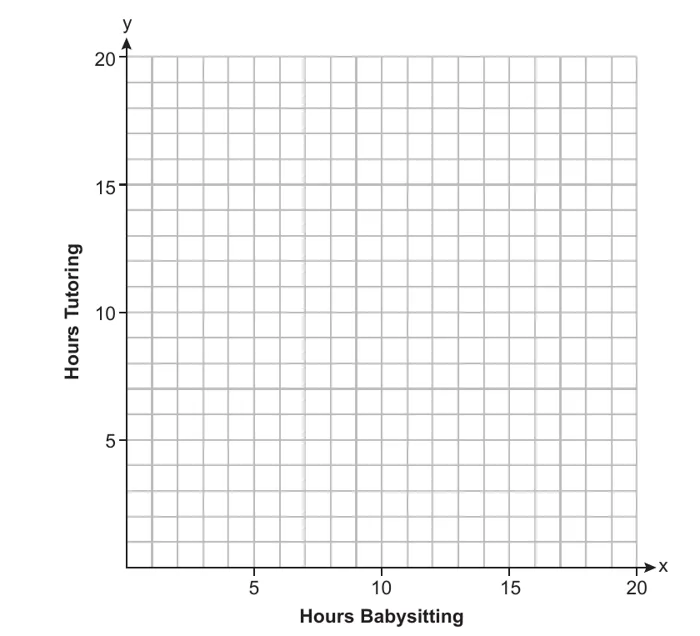
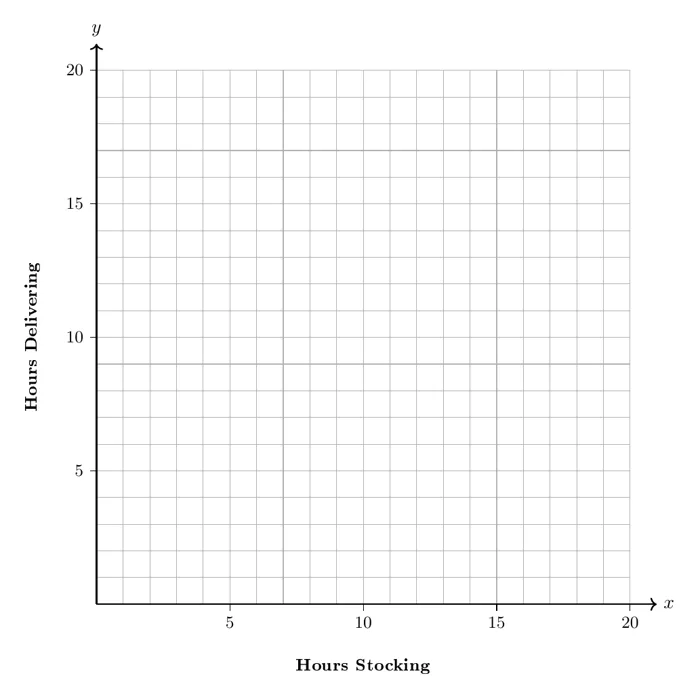
- y
Hours Tutoring→ Hours Delivering- x
Hours Babysitting→ Hours Stocking
- Cloned from the real paper11 questions rewritten skill for skill and credit for credit, every answer key checked before delivery.
- Graphs redrawn to match3 grids drawn again with the new axis labels and scale, inside the Word file, not left for you to sketch.
- One paper you keep shaping"Make it easier" reworked the same 11 questions in place and added worked solutions. Second file, same conversation.
01 · REQUEST 1
cloned the eleven written-answer questions
Make me a new practice paper from Parts II, III and IV of this (Q25-35). Same topics and same credit values, but change the numbers and contexts so the kids can't google the answers. Keep the 'show your work' instructions.
Read the exam and worked from Parts II to IV
A 28-page PDF. The teacher wanted only the written-answer parts, so the new paper keeps their shape: six 2-credit questions, four 4-credit questions and one 6-credit question, each with its "show your work" line.
- Part II6 × [2]
- Part III4 × [4]
- Part IV1 × [6]
Wrote a new question for each old one
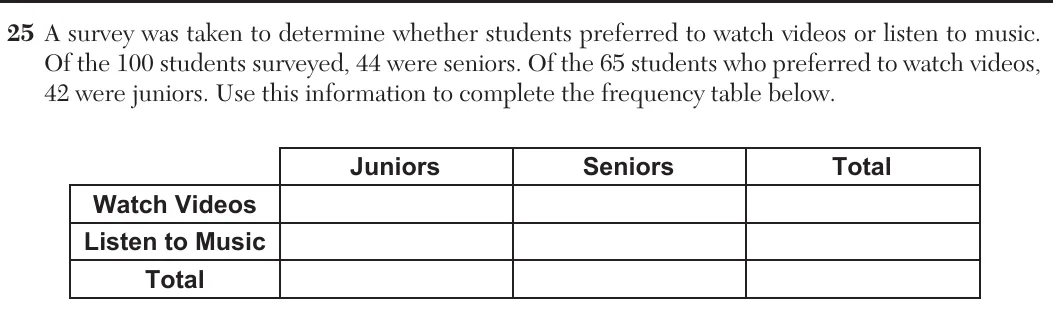
Same skill, same credits, a different story and different numbers. Exam question 25 asks juniors and seniors about videos and music; practice question 1 asks runners about morning and evening runs, and still needs the same two-way table.
The exam, question 25
The new paper, question 1
Question 1[2]
A survey was taken to determine whether runners preferred morning runs or evening runs. Of the 150 runners surveyed, 68 were women. Of the 92 runners who preferred morning runs, 45 were men. Use this information to complete the frequency table below. Show all work to receive full credit.
Marked: everything that changed. The table, the credits and the "show your work" line are the exam's own. Checked every answer before handing over
Each new question comes with its key, and a second pass solves all eleven from scratch and compares. Its report on this paper is quoted on the right. The key for question 1 is the filled table.
All 11 keys correct, answerable, on-topic, no duplicates.
Answer key, question 1
Men Women Total Morning Runs 45 47 92 Evening Runs 37 21 58 Total 82 68 150 Redrew the graphs for the new stories
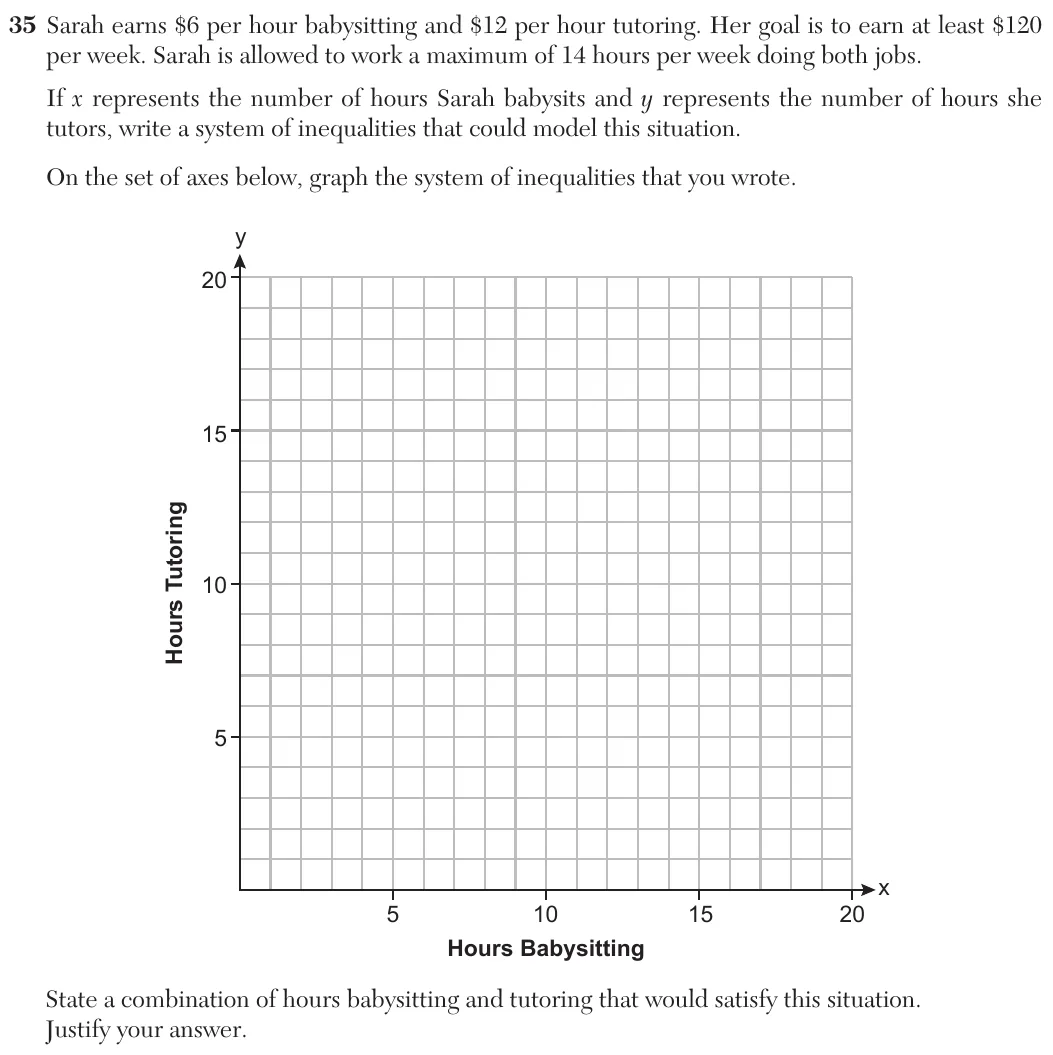
Three of the eleven questions need a grid. A new story means new axis labels, so each grid was drawn again for its question and placed in the Word file. The last question swaps babysitting and tutoring for stocking shelves and delivering groceries; the 0 to 20 scale stays.
The exam, question 35
The new paper, question 11
- y-axis
Hours Tutoring→ Hours Delivering- x-axis
Hours Babysitting→ Hours Stocking
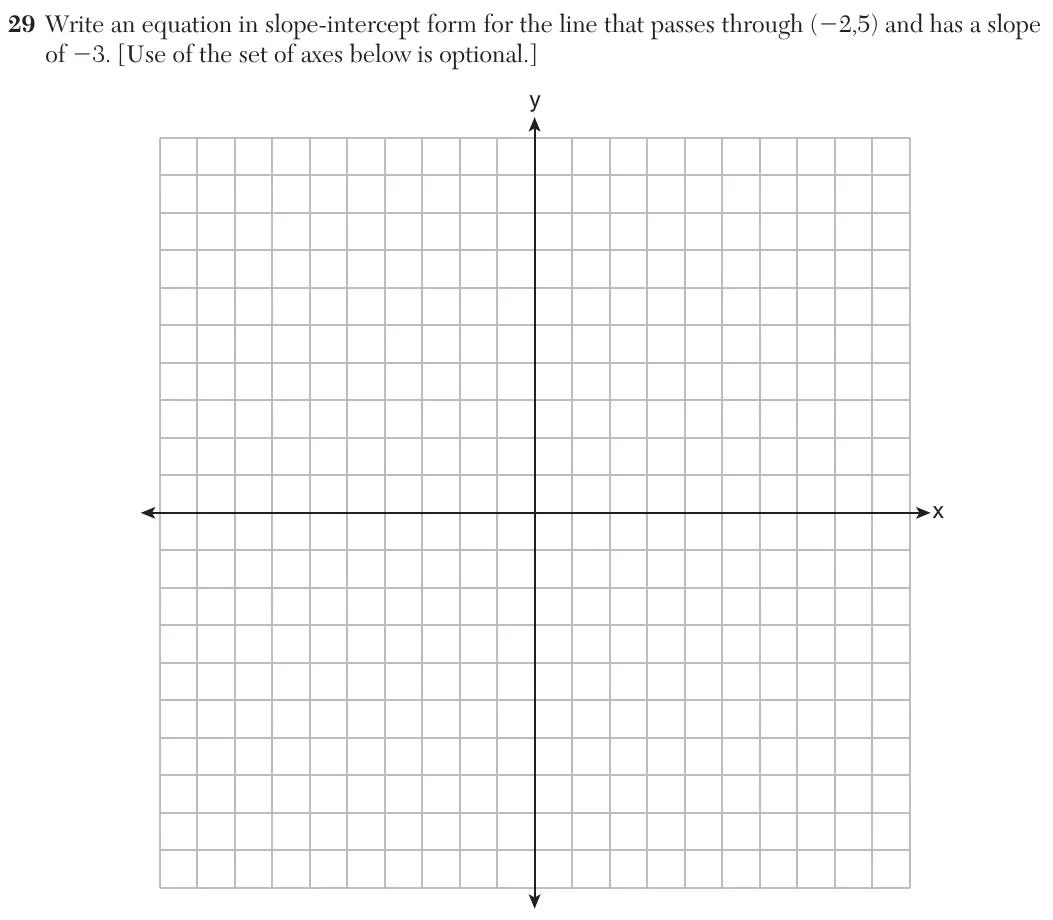
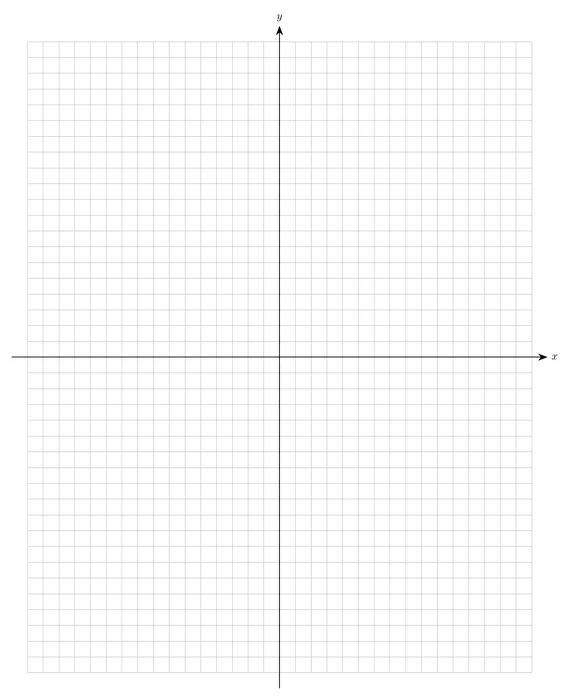 Question 5: axes for the line
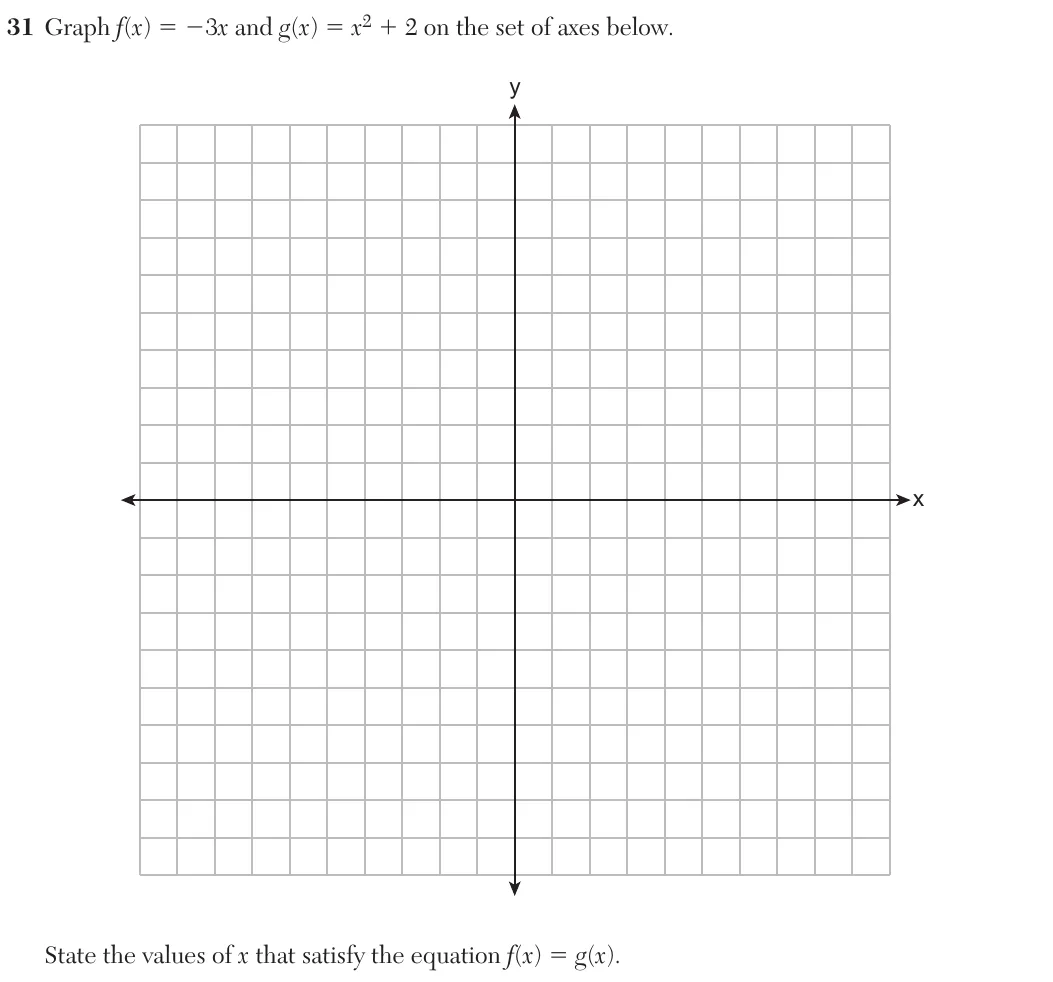
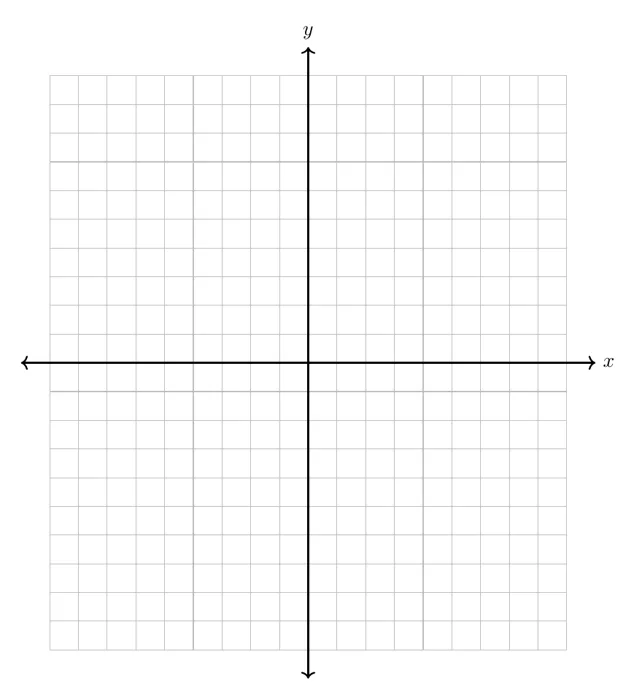 Question 7: grid for f(x) and g(x)
02 · REQUEST 2
Asked for an easier version, reworked the same paper
Good. Now make that same paper a bit easier for my support class - smaller whole numbers, fewer steps where you can - and add an answer key with worked solutions at the end.
Shrank the numbers in ten of the eleven questions
The paper was edited in place, not written again: the stories, the parts, the credits and the "show your work" lines stay. Question 7 was left as it was, because its functions were already small.
- Q1
150 runners→3068 women→1492 morning→1845 men→10 - Q2
6(2 − y) > −10y − 4→3(2 − y) > y − 10 - Q4
−14, _, _, 7→2, _, _, 11 - Q11
$10 / $15 an hour→$6 / $8at least $180→$8018 hours→14 hours
- Q1
Wrote a worked solution for every question
The first paper had a key with final answers. The easier paper ends with a step-by-step solution for each question, recomputed for the new numbers, so a student in the support class can check their own work.
Question 2 of the easier paper
Solve the inequality for : . Show all work to receive full credit.
Request 1: answer key
.
Request 2: worked solution
- Distribute: .
- Add to both sides: .
- Add 10: .
- Divide by 4: , so .
03 · EVERY QUESTION
See all eleven, old against new
Each card shows the exam question as printed, then what came back from request 1 with its answer, and from request 2 with its worked solution. Swipe or use the arrows.
The exam, question 25
Request 1: new numbers
Question 1[2]
A survey was taken to determine whether runners preferred morning runs or evening runs. Of the 150 runners surveyed, 68 were women. Of the 92 runners who preferred morning runs, 45 were men. Use this information to complete the frequency table below. Show all work to receive full credit.
| Men | Women | Total | |
|---|---|---|---|
| Morning Runs | |||
| Evening Runs | |||
| Total |
| Men | Women | Total | |
|---|---|---|---|
| Morning Runs | 45 | 47 | 92 |
| Evening Runs | 37 | 21 | 58 |
| Total | 82 | 68 | 150 |
Request 2: easier, worked solution
Question 1[2]
A survey was taken to determine whether runners preferred morning runs or evening runs. Of the 30 runners surveyed, 14 were women. Of the 18 runners who preferred morning runs, 10 were men. Use this information to complete the frequency table below. Show all work to receive full credit.
| Men | Women | Total | |
|---|---|---|---|
| Morning Runs | |||
| Evening Runs | |||
| Total |
Worked solution
Morning–Men 10, Morning–Women 8, Morning Total 18; Evening–Men 6, Evening–Women 6, Evening Total 12; Men Total 16, Women Total 14, Grand Total 30.
- Of the 18 morning runners, 10 were men, so morning women = 18 − 10 = 8.
- Total women = 14, so evening women = 14 − 8 = 6.
- Total runners = 30, so evening runners = 30 − 18 = 12, and evening men = 12 − 6 = 6.
- Men total = 10 + 6 = 16; check 16 + 14 = 30. ✓






The files
Where the file comes from: NYSED Regents Examinations, Algebra I, the June 2025 exam, copyright of the New York State Education Department. The excerpts of it on this page are shown only to compare with what wrote.
Bring your own exam
Upload a past paper and say what you need. writes new questions on the same skills, redraws the graphs, checks the answers, and keeps reshaping that same paper as you ask: easier, harder, with worked solutions.
KEEP READING