WORKED EXAMPLE · POWERPOINT TRANSLATION
OSHA training deck translated to Spanish, speaker notes included
An EHS coordinator at a distribution centre had OSHA’s 23-slide “Flammable Liquids” training deck. They asked to translate it into Spanish for the warehouse crew, speaker notes included, without touching the regulation citations or the numbers.
translated the slides and the trainer notes inside the same PowerPoint file, and kept all 13 citations and every °F and °C value as written. Then, in a short follow-up, it put the site name on the cover and added Celsius to the flash-point table, changing only those three text boxes.
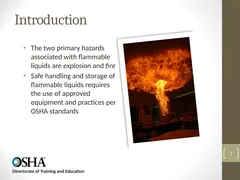
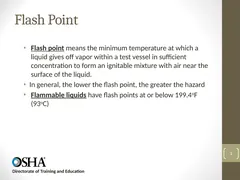
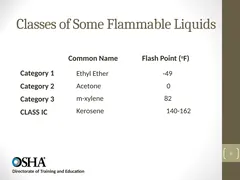
1The original deck: slide 3 and its speaker notes
Notes
1910.106(a)(14)Flammable liquids themselves will not burn, but as the liquid evaporates, it gives off vapors that mix with the air to form dangerous gases that can be set off by a small spark. Gasoline, for example, evaporates at temperatures as low as 45 degrees Fahrenheit below zero. As the temperature rises, the rate of evaporation increases and more and more vapors are given off. Flammable vapors are usually heavier than air so they collect in the lowest areas they can reach. Without good ventilation to dissipate them, a small spark can set off a big disaster.
- 23slides, translated in the original file
- 12slides of speaker notes translated
- 13/13regulation citations kept as written
- 3text boxes changed by request 2, nothing else
Open the real files
These are the actual files from the run. Download them and open them in PowerPoint, speaker notes and all.
Where the file comes from: osha.gov, the “Flammable Liquids” deck in the OSHA training materials library, by the OSHA Directorate of Training and Education. A work of the US government. This page is not affiliated with or endorsed by OSHA. Training library
01 · THE STARTING FILE
23 slides, with the trainer’s script in the notes
The deck teaches warehouse workers how to store and handle flammable liquids. Under most slides, the speaker notes tell the trainer what to say, and 13 of them start with the OSHA rule the slide is based on, such as 1910.106(a)(14). Those citations, and every temperature and quantity, had to come through the translation exactly as written.
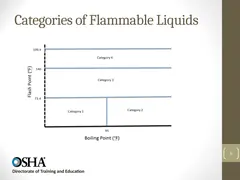
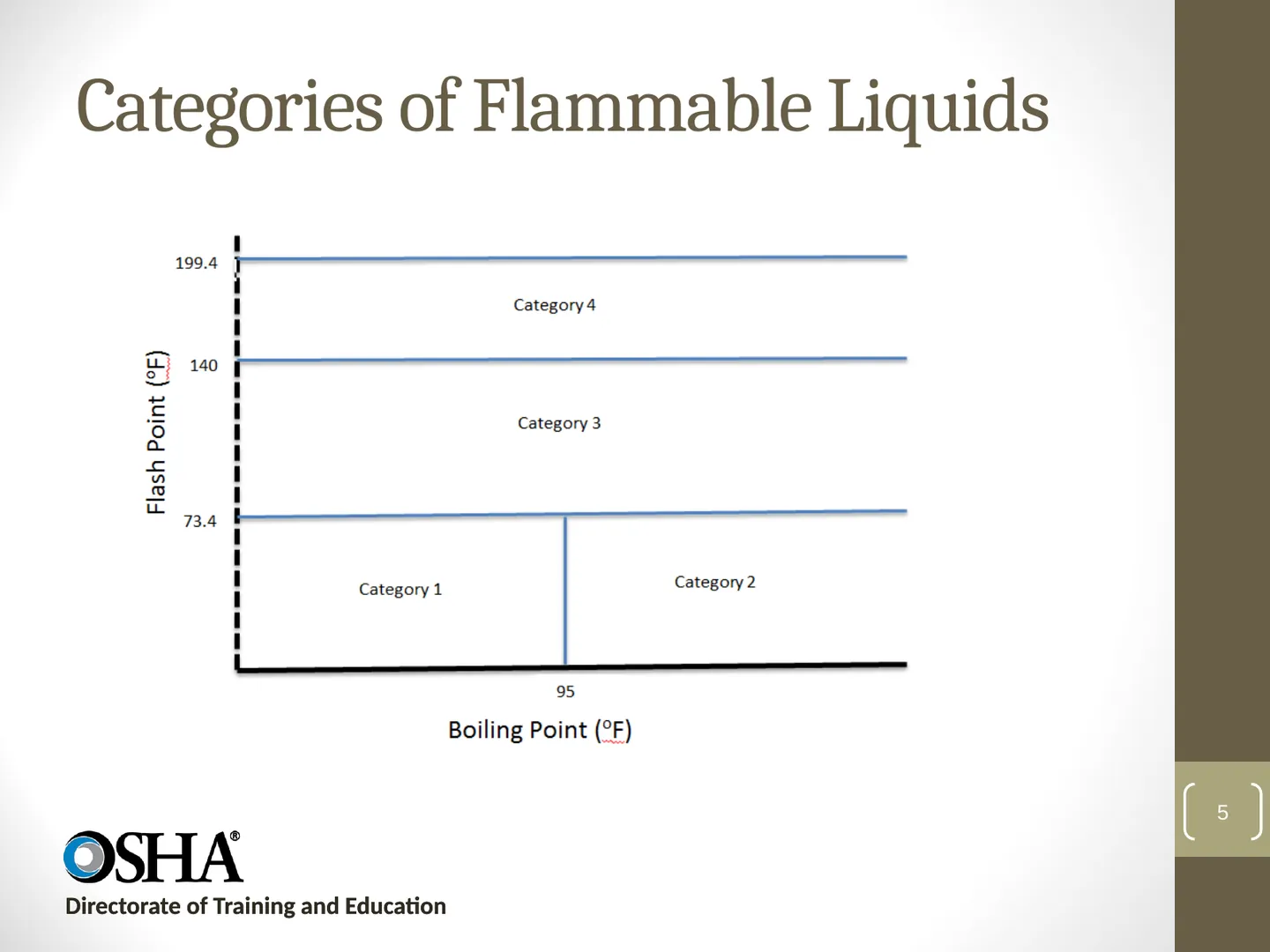
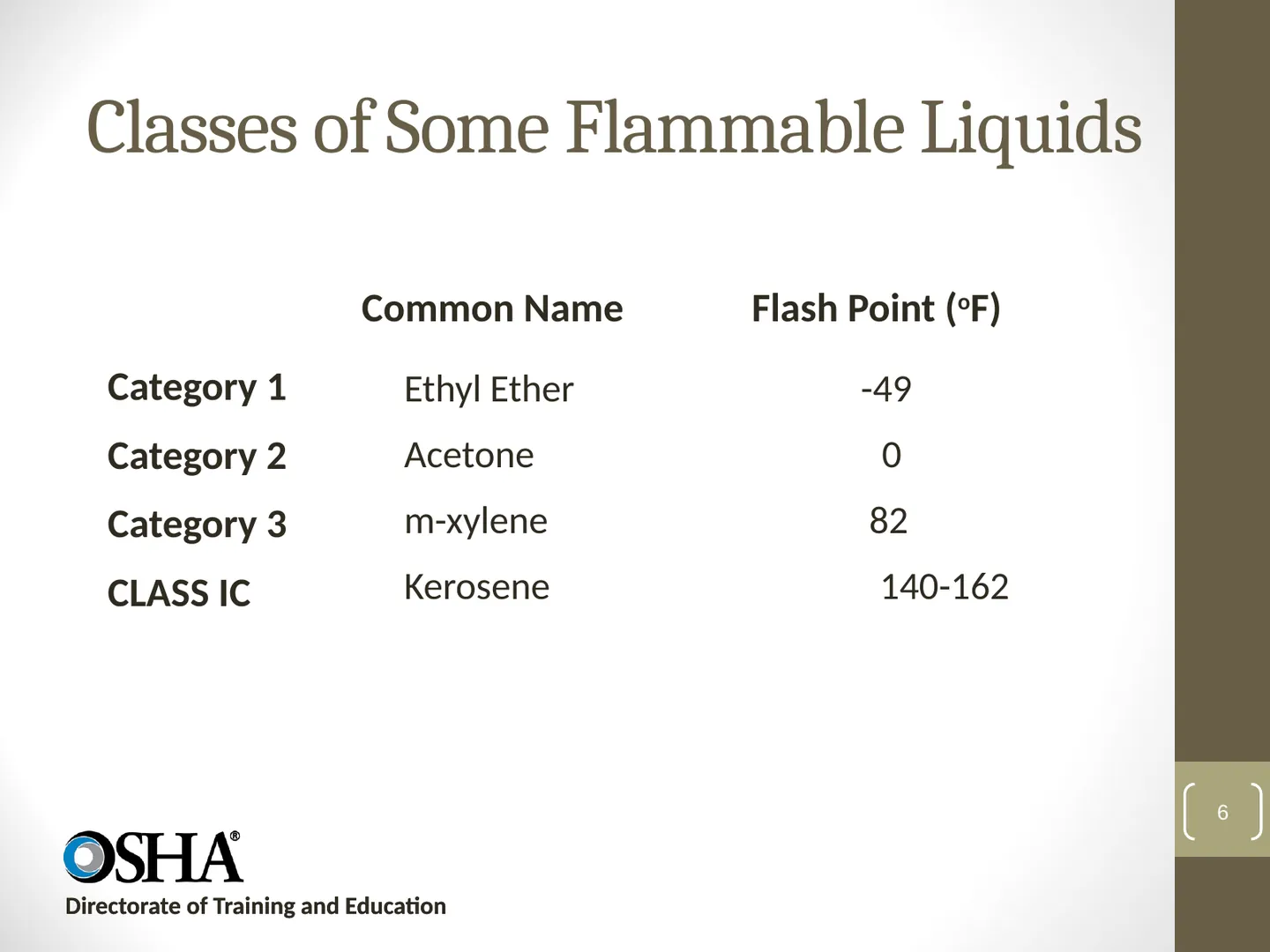
Two slides are harder than they look. The chart on slide 5 is a picture, so its words cannot be edited at all. The table on slide 6 is two text boxes whose columns are lined up with tabs and spaces.
02 · REQUEST 1
"Translate it into Spanish, notes included"
What the coordinator typed
Please translate this OSHA "Flammable Liquids" training deck (23 slides) into Spanish for our warehouse crew and give it back as a PowerPoint file.

- Translate all text on the slides, including the extra text boxes (slides 4, 7, 13, 18, 21), the labels on slide 6, and the speaker notes on every slide that has them.
- Leave the regulation citations in the notes exactly as written, e.g. "29 CFR 1910.106", "1910.106(a)(14)", "1910.106(d)(3)(i) and (ii)" (only "and" may become "y").
- Keep all numbers and units unchanged (199.4 °F / 93 °C on slide 3, 5 gallons on slide 14, 60 and 120 gallons and 2 inches on slide 16).
- Don't change the pictures or the OSHA logo. The chart on slide 5 is an image, so just tell me which words in it stay in English.
- Keep the layout; no text should spill out of its box.
What did
- Translated the deck inside the uploaded PowerPoint file: titles, bullets, the extra text boxes on slides 4, 7, 13, 18 and 21, the labels on slide 6 and the photo captions on slide 21.
- Translated the speaker notes on all 12 slides whose notes are written out. The 5 notes that hold only a citation were left as they were.
- Kept the 13 regulation citations exactly as written, and every number: 199.4 °F (93 °C), 5, 60 and 120 gallons, 2 inches, and the six temperatures in the slide 5 notes.
- Left all 18 pictures alone: they are the same image files as before.
- Told the coordinator which words in the slide 5 chart stay in English: "Category 1" to "Category 4", "Flash Point (°F)" and "Boiling Point (°F)".
Speaker notes
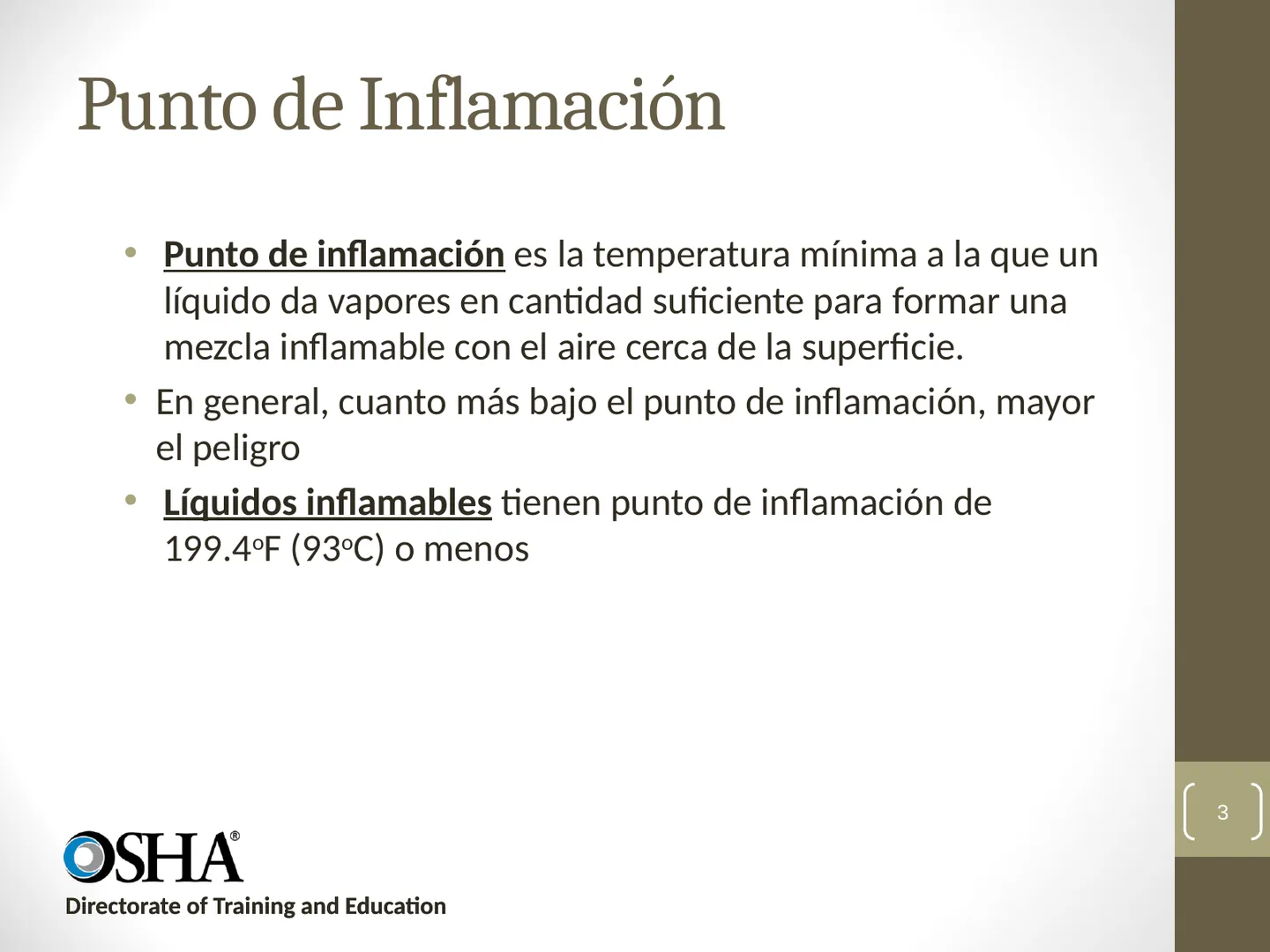
1910.106(a)(14) Punto de inflamación es la temperatura mínima a la que un líquido da vapores en cantidad suficiente para formar una mezcla inflamable con el aire cerca de la superficie. Los líquidos inflamables no se queman por sí mismos, pero al evaporarse dan vapores que se mezclan con el aire y forman gases peligrosos que una chispa pequeña puede encender. Por ejemplo, la gasolina se evapora a temperaturas de hasta 45 grados Fahrenheit bajo cero. Al subir la temperatura, aumenta la evaporación y salen más vapores. Los vapores inflamables suelen ser más pesados que el aire y se acumulan en las zonas más bajas. Sin buena ventilación, una chispa pequeña puede causar un gran desastre.
Worth knowing before you present it: one bullet on slide 16 stayed in English, because it quotes the label "Flammable - Keep Fire Away" and left quotations alone; its reply said one quotation was left untouched. The "Directorate of Training and Education" line on the cover also stayed in English until request 2 replaced it. Spanish runs longer than English, so on slides 16 and 22 the last lines now reach the footer.
The 13 citations, slide by slide
| Slide | Slide title in Spanish | Citation in the notes | Request 1 |
|---|---|---|---|
| 2 | Introducción | 29 CFR 1910.106 | unchanged |
| 3 | Punto de Inflamación | 1910.106(a)(14) | unchanged |
| 5 | Categorías de Líquidos Inflamables | 1910.106(a)(19) | unchanged |
| 7 | Fuentes de Ignición | 1910.106(e)(6)(i) | unchanged |
| 9 | Unión (Bonding) | 1910.106(e)(6)(ii) | unchanged |
| 10 | Conexión a Tierra | 1910.106(e)(6)(i) | unchanged |
| 11 | Ventilación | 1910.106(a)(31) | unchanged |
| 13 | Almacenamiento de Líquidos Inflamables | 1910.106(d)(5)(i) and (iii) | unchanged |
| 14 | Latas de Seguridad para Almacenar y Transferir | 1910.106(a)(29) | unchanged |
| 16 | Gabinetes de Almacenamiento | 1910.106(d)(3)(i) and (ii) | unchanged |
| 17 | Control de Fuego | 1910.106(d)(7)(i) and (iii) and (iv) | unchanged |
| 18 | Transferencia de Líquidos Inflamables | 1910.106(e)(2)(iv)(d) | unchanged |
| 21 | Desechos y Residuos | 1910.106(e)(9)(iii) | unchanged |
03 · REQUEST 2
"Put our site on the cover and add Celsius"
What the coordinator typed
Two edits on the Spanish deck you just made:

1. Slide 1: replace the text under the OSHA logo (originally "Directorate of Training and Education") with "Capacitación de seguridad - Almacén Norte, octubre 2026". Leave the footer on the other slides alone.
2. Slide 6: after each Fahrenheit flash point add the Celsius value rounded to whole degrees, in the form "-49 °F (-45 °C)", and change the column heading so it covers both units. Keep the four rows lined up with their names.

Don't change anything else and don't re-translate the deck from English.
What did
- Edited the Spanish deck from request 1. It did not translate anything again.
- Replaced the line under the logo on the cover. The footer on the other slides was not touched.
- Added the Celsius value after each Fahrenheit flash point on slide 6, rounded to whole degrees, and changed the heading to cover both units.
- Changed nothing else: no other slide, note or picture.
- Before
- Directorate of Training and Education
- After
- Capacitación de seguridad - Almacén Norte, octubre 2026
| Nombre Común | °F | °C, added | |
|---|---|---|---|
| Categoría 1 | Éter etílico | -49 | -45 |
| Categoría 2 | Acetona | 0 | -18 |
| Categoría 3 | m-xileno | 82 | 28 |
| CLASE IC | Queroseno | 140–162 | 60–72 |
Your deck, in another language, still your deck
translates inside the PowerPoint you uploaded, speaker notes included. It keeps your pictures, numbers and citations as they are, tells you what it could not translate, and takes follow-up edits on that same file.
KEEP READING
Read another worked example
Human Resources
Fill in an offer-letter template, then track the renegotiated terms
Healthcare
A 68-page drug label to a 2-page patient leaflet, then Spanish
Healthcare
A health letter to parents simplified as tracked changes, then Polish
See all 19 worked examples →All examples for Human Resources →